Category Archives: Oceans

Morton Fights On as Moment of Truth Approaches at Cohen Commission

Share

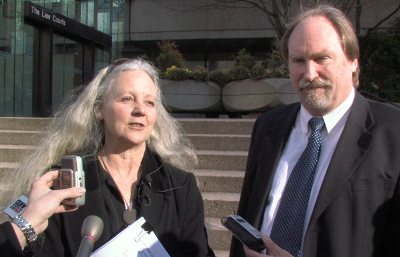
Read this article from the Nanaimo Daily News on biologist Alexandra Morton’s perseverance in the face of exhaustion after 20 years of battling open net cage salmon farms.

“Morton is scheduled to testify Sept. 7-8 in Vancouver at the Cohen
Commission inquiry into the cause of the disastrous decline of the 2009
Fraser River sockeye salmon…She said from her home in B.C.’s Broughton Archipelago Monday that she
will “continue indefinitely” to fight for the cause, despite the lack of
progress in convincing Ottawa and the industry to move away from using
open-net pens to closed containment systems so they have no impact on
wild salmon.” (Aug 16, 2011)

Share

Farmed Salmon Confidential (Part 2): The Cover-up

Share

Part 2 of a 2-part series – read part 1 here.

When does a foreign-owned corporation’s right to protect its share price trump the environment and Canadian public’s rights? Apparently, when it’s the Norwegian salmon farming industry.

Numerous instances from the past several years reveal a pattern of salmon farmers resisting transparency when it comes to disease and parasite monitoring – and the excuse often given is severe financial damage to the companies involved. But if there’s nothing untoward about their operations, as they maintain, then how could the release of said data prove so damaging to their bottom line?

Norwegian Shareholders Before BC’s Wild Salmon

Documents obtained by The Common Sense Canadian reveal that the Norwegian-owned companies Marine Harvest and Cermaq (who together control three quarters of B.C.’s salmon farms) have been lobbying behind the scenes since at least 2008 for the Government not to release disease information. The BC Salmon Farmers Association (BCSFA) also successfully argued against the disclosure of disease data during the Cohen Inquiry, with Justice Cohen ruling in June that information must be kept confidential until the evidentiary hearings on aquaculture.
 
Clearly, these companies are very worried about this information getting out to the public.

Marine Harvest admitted in a submission to the Office of the Information & Privacy Commissioner in 2008 that the release of disease information “would cause significant commercial harm,” “undue financial loss” and that “Marine Harvest Canada’s reputation could be tarnished and sales volume reduced”. It further stated: “Marine Harvest is a publicly traded company on the Oslo Stock Exchange and as such, corporate reputation is very important in maintaining share price and shareholder loyalty.” (On a side note, has this industry even informed their shareholders of the risk of Infectious Salmon Anemia in BC?)

Marine Harvest’s largest shareholder, incidentally, is Norway’s richest man, John Fredriksen, worth over $10 billion. (In 2007, while fishing on Norway’s River Alta, Fredriksen admitted to the Altaposten Newspaper, “I’m concerned about the future of wild salmon. Move salmon farms out of the path of wild salmon.”)

Meanwhile, Cermaq – who operate in Canada as Mainstream and whose largest shareholder is the Norwegian Government – claimed in another submission in 2008 to the Office of the Information & Privacy Commissioner that “disclosure would result in “undue financial loss” to Mainstream,” “damage Mainstream’s business” and referred to “the harm which such information in the wrong hands can do.”

Similar statements were made by the BCSFA in submissions to the Cohen Inquiry in May this year. The industry lobby conceded that should disease data be disclosed publicly there would be a “likelihood of misuse and irrevocable damage to the economic interests and reputations of participants and individuals.”  In another submission to the Cohen Inquiry in May, the BCSFA admitted, “Irreparable damage will occur to the reputations and economic interests of the BCSFA’s member companies and their shareholders.”
 
While the BCSFA – whose members include the Norwegian companies Marine Harvest, Cermaq and Grieg – has been privately lobbying for the non-disclosure of disease data, they have issued public statements claiming “good health” and “healthy fish” on BC salmon feedlots.  This is despite the fact that in April 2010, BC’s salmon farmers began refusing access to government inspectors to carry out disease monitoring.
 
Meanwhile, even the data the industry group wants the public to see reveals a host of deadly diseases, viruses, pathogens and bacteria since 2003 (published online via the “BCSFA Fish Health Database“).

The latest disease data for Q1 2010 (2011 information is still not publicly available) reports the existence of: Lepeophtheirus Infection, Myxobacterial Infection, Viral Haemorrhagic Septicemia Virus Infection, Aeromonas salmonicida Infection and Piscirickettsia salmonis Infection on BC farms. A financial report published recently by Marine Harvest also reveals that the parasite Kudoa cost the company in Canada $4 million and resulted in reduced prices (kudoa causes myoliquefaction or soft-flesh syndrome which is off-putting to buyers).

Dr. Kristi Miller and Salmon Leukemia
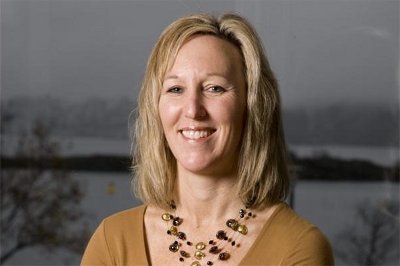
It’s not just the industry that seems intent on keeping potentially damaging data in locked filing cabinets. The case of Dr. Kristi Miller has recently made headlines across the country.

Dr. Miller’s work was hailed by the world’s top scientific journal Science as a breakthrough when it published her paper in January of this year. In BC, Miller had stumbled onto a disease known as Salmon Leukemia – which causes brain lesions in salmon that may be related to pre-spawn mortality (when fish die just before making it back to their home rivers to spawn).

Dr. Miller was barred from speaking to the media about her findings by the Privy Council, which supports the Prime Minister’s Office. This isn’t surprising when you view a powerpoint of hers released already as an exhibit by the Cohen Inquiry on March 17, which suggests Salmon Leukemia is causing brain tumors in our sockeye and relates the virus to salmon farms.

To what extent this disease is related to salmon farms on BC’s coast and/or collapsing Fraser River sockeye stocks remains to be seen, but Dr. Miller will finally have her chance to answer questions when she’s on the stand and under oath during the Cohen Commission’s “Diseases” hearing on August 24.

This will be one of the big questions to be answered at the Judicial Inquiry: “To what extent is Salmon Leukemia affecting Fraser River salmon stocks?”

Is ISA Here?

The other big question is: “Is Infectious Salmon Anaemia in British Columbia – and, if so, how is it affecting/could it affect wild salmon?”
 
And If ISA isn’t lurking in B.C., what other deadly diseases could possibly precipitate such “irrevocable” and “irreparable” financial meltdown were they to be revealed publicly? In Chile, ISA precipitated a financial meltdown which caused an estimated $2 billion in losses as up to 80% of farms were shut down in just a few years.
 
The Globe & Mail reported in May (in data submitted to the Cohen Inquiry): “There are approximately 35 indications of the existence of ISA identified in these records to date.” But Cermaq maintain, “ISA is not here,” and, “ISA is an East coast disease.”

Cermaq’s Communications Officer in Canada, Grant Warkentin, claimed in a letter to The Courier-Islander in May: “There is no ISA here; the disease is catastrophic for Atlantic salmon, so of course farmers are always looking for it; and again, there is no ISA here.” Cermaq’s Communications and Corporate Sustainability Manager in Canada, Laurie Jensen, claimed during a public meeting in Tofino in June that “ISA is an East coast disease, not a West coast disease” and that symptoms of ISA are not in British Columbia.

Marine Harvest Canada, for their part, concede that there is no guarantee that ISA will not appear in BC. An article, “Are our fish safe from ISA?”, published in their newsletter in August 2009 concluded: “Can we guarantee that Marine Harvest Canada will never see ISA? Realistically no, but Marine Harvest Canada will continue to do everything within its power to minimize its likelihood of occurring and mitigate its impact should it ever be found.”

The BCSFA continue to claim publicly at least that “there are no findings of exotic disease” (January 2011) and an “absence of exotic disease” (May 2011).  The BCSFA flatly stated in a recent letter to The Courier-Islander, “ISA has not been found here.” Significantly, the letter also admitted that imports of eggs to B.C. continue, despite the science showing vertical transmission: “The small percentage of eggs that are imported are under strict regulations: including limiting sources to countries that have never seen ISA, as well as quarantine and testing programs before they’re ever used.” 

Judgment Day

Judgment Day may be fast approaching for the three Norwegian multinationals – Marine Harvest, Cermaq and Grieg – which control 92% of the BC salmon farming industry. In addition to the scientists, government and industry officials to take the stand, after years of pushing by the industry’s critics, 10 years of disease data for 120 salmon farms in B.C. will be submitted to public scrutiny for the first time.

If and when compelling new evidence comes to bear – on the public record, there for media to freely report – connecting BC’s declining salmon populations with diseases related to the salmon farming industry, the fall-out for the industry could indeed be as severe as it fears. Those flashy TV ads professing the industry’s utter innocence would certainly come back to haunt it, as would all the years of obstructing the communication of important science to the public whose wild salmon and marine environment are at stake.

After all, as Watergate taught us, “it’s not the crime, it’s the cover-up.”

Is the Norwegian salmon farming industry in line for a Nixonian fall? Be there at the Cohen Commission starting August 22 to find out for yourself – or stay tuned to The Common Sense Canadian for our extensive coverage.


Share

Farmed Salmon Confidential (Part 1): ISA and the Cohen Commission

Share

Part 1 of a 2-part series – read Part 2 here

This past year, the Norwegian-controlled salmon farming industry spent $1.5 million on a glitzy advertising campaign in BC, which essentially denied the impacts of open net cage salmon farms on wild fish and the marine environment. The ads left viewers with the impression the industry’s critics are nothing but a bunch of raving conspiracy theorists.

At the same time, unbeknownst to the public, the salmon farmers were facing their toughest hurdle to date – and it was no longer about sea lice, as it has so often been in the past. The subject matter was of a much smaller but infinitely more damaging nature – the possibility that viruses connected to their operations were not only devastating their own farmed fish in places like Chile, but could potentially be linked to mysterious crashes of iconic wild salmon runs on Canada’s west coast. What’s worse, it’s now clear the industry knew about these problems and has done everything in its power to keep them from the public.

ISA and Salmon Leukemia

Largely thanks to the Cohen Commission into collapsing Fraser River sockeye stocks, significant new information has been trickling out over the past year, which – when one assembles the pieces of the puzzle – reveals a coordinated cover-up by the industry of this damaging information, aided by both the BC and Canadian governments. As the aquaculture portion of the Cohen Commission in late August and September draws near, The Common Sense Canadian will attempt through a two-part feature this week to connect the dots and reveal the nature of this cover-up to our readers.

There are two different viruses at issue here – the first, Infectious Salmon Anemia (ISA) was responsible for decimating up to 80% of the farmed salmon industry in Chile throughout 2008 and 2009 and has affected Norway, Scotland and the East Coast of Canada. While it isn’t known officially to affect wild Pacific salmon yet, the concern is that it may mutate (or may already have done so – more on that later), with catastrophic results for our wild fish.

The second is known as Salmon Leukemia and results in brain lesions which are likely already affecting BC’s wild salmon stocks. Research on this virus is newer than with ISA and the potential of a connection to salmon farms requires immediate further investigation.

Salmon Leukemia was the subject of a recent paper published by DFO scientist Dr. Kristi Miller – whose muzzling by officials connected to the Prime Minister’s office has made headlines. The world’s most prestigious journal, Science, called Dr. Miller’s paper some of the most significant new salmon research in a decade, and yet she was barred from speaking with any media following its publication in January of this year. (More on that in Part 2 of this series).

The Chile Report

We will begin here with ISA and the topic of “vertical transmission” – which refers to the passing of the disease from parent to offspring through eggs. In Canada, DFO has maintained that the disease doesn’t travel this way (evident in correspondence with salmon biologist Alexandra Morton, who began raising concerns about “vertical transmission” to DFO in 2009). But that’s in direct contrast to what the best research out of Norway has been showing for almost three years now.

In November 2008, the scientific journal Archives of Virology published a paper titled, “ISA virus in Chile: evidence of vertical transmission” – which identified an unnamed Norwegian broodstock company as being responsible for spreading ISA to Chile from Norway via infected eggs.

Immediately following the paper’s publication, the Norwegian broodstock company AquaGen (whose shareholders include the world’s #1 and #2 salmon farming companies – Marine Harvest and Cermaq) filed a formal complaint with Norway’s National Commission for the Investigation of Scientific Misconduct, charging the paper’s findings were inaccurate. In doing so, they (AquaGen) outed themselves as the previously unnamed subject of the report. Cermaq, who had financed the scientific research via lead author and company employee Dr. Siri Vike (and owned more than 12% of the subject egg company) said nothing at the time.

It was only in April 2011, over two years after the complaint, that Norway’s National Commission for the Investigation of Scientific Misconduct unanimously ruled that the scientific research was valid. Cermaq was faced with no choice but to come out publicly in support of the research and in late April Dr. Siri Vike gave a presentation in Oslo, Norway, acknowledging the vertical transmission of ISA to Chile from Norway. Cermaq published the presentation – “Preventative Fish Health Work” – very quietly on their website in early May.

Unfortunately for Cermaq – which is over 40% owned by the Norwegian Government – sometime in late June of this year the company “accidentally posted online” private minutes of a “Cermaq Corporate Team” meeting in April. The notes referred to the “very sensitive” situation in B.C. and stated that: “[Salmon farm activist Don] Staniford has been twittering about Siri Vike and the article on the ISA virus and how it originated from Norway.”

Following the publication of the private minutes in full online by Alexandra Morton in early July, Cermaq responded with an article on “The real ISA ‘situation in BC’ for Mainstream Canada” – which claimed that “the research mentioned has to do with Chile and Norway, and nothing to do with Canada,” and, “there is no ISA present in our broodstock.”

The Secret ISA Files

The industry flatly denies ISA is here in BC – and yet we would do to be cautious, as some 12 million Atlantic salmon eggs have entered BC since 2004. And according to legal discussions that emerged recently from the Cohen Commission – as reported by Mark Hume in the Globe and Mail this past May – documents show that the symptoms of ISA are already being detected in BC’s farmed fish.

According to Hume, Alexandra Morton’s lawyer at the Commission, Greg McDade, submitted theses facts to Justice Cohen in an effort to have his client released from the Commission’s confidentiality undertaking so she could pass this ISA information to the Canadian Food Inspection Agency. McDade wrote to the Commission, “There are approximately 35 indications of the existence of ISA identified in these records to date. Of great biological concern is that some of these diagnoses are in Pacific salmon, suggesting potential spread of a novel and virulent virus into native populations may be underway into the North Pacific.”

In other words, ISA could already be here in BC – and may already be mutating to affect wild salmon.

And why wouldn’t it be? Canada doesn’t even ask foreign hatcheries to report ISA on the certificate they have to sign before shipping eggs to BC – and ISA was not reportable on BC farms until January of this year. Bear in mind these are the same companies operating here as in Chile.
 
The industry’s lawyers fought McDade’s request to have his client released to share these documents with the Canadian Food Inspection Agency (who has a legal obligation to know this information). The BCSFA successfully argued against the disclosure of disease data during to the Cohen Commission, with Justice Cohen ruling in June that information must be kept confidential until the evidentiary hearings on aquaculture. 

In May, the BCSFA conceded that should disease data be disclosed publicly there would be a “likelihood of misuse and irrevocable damage to the economic interests and reputations of participants and individuals.”  In another submission to the Cohen Commission in May, the BCSFA admitted, “Irreparable damage will occur to the reputations and economic interests of the BCSFA’s member companies and their shareholders.”

But the industry’s efforts to keep this disease data under wraps may prove short-lived, as much of it is expected to enter the public record during the Inquiry’s aquaculture hearings from August 21 through September 8 – in which case the cat would truly be out of the bag.

Watch for Part 2 of “Farmed Salmon Confidential” this Thursday, as we discuss Salmon Leukemia and reveal the lengths to which the industry has gone to prevent testing of their farms and the publication of disease records that it says would cause “irreparable” and “irrevocable” financial damage to these Norwegian corporations.

Share
DFO's Dr. Kristi Miller - recently muzzled from discussing her bombshell salmon disease findings, published in the prestigious journal Science earlier this year

Latest DFO Scientist Muzzling Part of Bigger Pattern Ignored by Media

Share

The revelation by the Sun and the Province that a scientist in DFO, Dr. Kristi Miller, has been muzzled by the DFO and the Privy Council (which supports the Prime Minister’s Office) simply underscores how badly they have covered environmental matters in general and salmon concerns specifically.
 
For example, back in the mid-nineties there was a hell of a row over the Kemano Completion Project which involved taking some 90% of the Nechako River (near Prince George) which would have seriously impeded the large Sockeye runs into the Stuart River system. The permission for Alcan to do this was given, over the objections of fish scientists who had done a large study on the project and pointed out the folly it was. These scientists were hushed up by DFO and Tom Siddon, Fisheries Minister, who called it an “acceptable risk”. Several of these scientists were given early retirement or had their lives made so miserable that they got out. During this war, for war is what it was, these former DFO scientists were branded the “dissident scientists” by Alcan, a sobriquet they bore with great pride. They had been true to the public of Canada and to themselves.
 
The report to which I referred was buried by DFO and it came to me, 7 years later, in the height of the fray, in the traditional brown envelope.
 
None of this was explored by the media except Ben Meisner of CJPG in Prince George and me on CKNW – “explored” is hardly the term for we fought like cornered Tigers.
 
This leaked report had considerable influence on the BC Utilities Commission whose findings prompted then Premier Harcourt to tube KCP.
 
One of my treasured possessions is a poster showing a salmon jumping up a waterfall which all the “dissident” scientists signed in my honour. They were wonderful men. One of them, Gordon Hartman, was my constant adviser during the fight.
 
Please forgive me if I sound egocentric but what I’m telling you is the truth. Amongst the media I was first and perhaps only member supporting Alexandra Morton from the beginning. I reported DFO threats to arrest Ms Morton for “illegal testing” Pink Salmon smolts and their own fake testing in the wrong place, at the wrong time and with the wrong tools. I helped expose the ridiculous DFO denial of escaping farmed fish and its idiotic advice to the Provincial government.
 
Editorial after editorial I pointed out that the same government department mandated to protect our salmon (DFO) were official shills for the fish farm industry.
 
The story is a long one but I simply emphasize that the media, especially the then Canwest (now in drag as Postmedia) and the Black Press were silent throughout.
 
I despair for the pressure Alexandra Morton has gone through and continues to suffer, more now, perhaps, than at any time. As she bears this terrific load on her back the media either doesn’t report what she and her allies are doing or misreport and belittle them.
 
A case in point – a couple of weeks ago a memo from a well respected DFO scientist, Dr. Brent Hargreaves, emerged from the documents revealed through the Cohen Commission into collapsing Fraser sockeye stocks. This from The Common Sense Canadian:
 
The 2003 memo recently made public via the Cohen Commission on collapsing Fraser sockeye stocks contains some truly shocking passages for their candour and for how clearly they vindicate those who have been critical of DFO’s salmon farm science. (emphasis mine) Written by a respected DFO scientist, Dr. Brent Hargreaves, the memo severely attacks the credibility of a colleague, key salmon farm apologist Dr. Dick Beamish, whose science Hargreaves labels as “shoddy” and “unethical”, among other pejoratives. Here are a couple of choice passages:
 
“The research on sea lice that has been conducted by Beamish has been strongly and widely criticized in both the scientific community and the public media…I think to a large degree it was the inadequacies of Beamish’s research and conclusions that led to the lack of public confidence in DFO science…

…I also do not want to be directly associated, either professionally or personally, with either Beamish or his research…He always does exactly as he pleases, regardless of the (often negative) impacts on DFO staff and research programs.
 
And what did the media do with this? Zilch!
 
Here we have the scientist responsible for the Campbell/Clark government’s policy on fish farms exposed as “shoddy science” and Beamish as a shill for the Fish Farmers, and the print media does not consider this of any interest to the great unwashed! Imagine the millions of fish that died because the provincial government followed Beamish not Hargreaves!
 
The Vancouver Sun is “Seriously Westcoast”???
 
Better late than never, I suppose, but the media owes the public big time and that debt must be paid by full coverage of environmental issues even when to do so upsets advertisers.
 
Postmedia using Freedom of Information, did, to their credit, expose the egregious silencing of Kristi Miller. Are they, then, making amends?
 
Let’s hope so, although I’m bound to say that the environmentalist community has found ways around the “see no evil, hear no evil, say no evil” monkey business of the mainstream media.
 
But it could do with all the help it can get, including a media that may finally have found its tongue.


Share

Oceans in Peril: Radical Action Needed to Avert 90% Species Extinction

Share

The oceans of Planet Earth currently contain about a quarter million species of marine organisms, which together constitute the Marine Food Pyramid and the Marine Food Web.  If we do not change our ways, radically and fundamentally, immediately or sooner, we stand to drive over 90% of them, or more than 225,000 species, to extinction, and that is from the oceans alone.

Of this 250,000-species global treasure the Marine Food Pyramid/Web, all the fishes on all levels and pathways combined number only 15,000 species, and all the marine mammals (whales, dolphins, seals) total only about 120 species.  And all of these advanced species will likely be among those that would go extinct, as will likely be most corals and arthropods (krill, crabs, lobsters).

This is not all speculation and computer modeling.  It has happened before, and can happen again.  We are talking about Earth’s Mass Extinction bouts,  the sixth  of which we are as we speak deeply entrenched.  50 years ago, the planet was losing about 20 known species a day; today, we are losing over 100 known species a day, meaning possibly ten times that many unknown species.  And when it is all said and done, we will have lost over 1.5 million known species, and many times that many unknown species – land, air and sea.

When we talk about mass extinctions, the End-Cretaceous Extinction 64 million years ago, the one that wiped out all the dinosaurs – Mass Extinction #5 – comes to mind.  But first, at about a 50% extinction rate, it was not the most severe among the Big 5, eliminating “only” about 50% of Earth’s species including all the dinosaurs; and second, it was not caused by global warming, but by an asteroid.

The worst of them all was #3, the End-Permian Mass Extinction 251 million years ago, which drove some 75% of all land species and 95% of all marine species – including all the corals – to extinction.  And it was caused by global warming resulting from geological activities associated with the break-up of the super-continent Pangaea.

The conditions are right for Mass Extinction #6 being a repeat of Mass Extinction #3, or even to out-do it.

This won’t be immediate, at least not in the human time frame – perhaps a century or two, or three – but it will happen if we follow our current trajectory.  The only difference is: Which of our future generations shall we devastate the most?

Meanwhile, as we do the Amazon rainforest on land, so we rape the oceans and the seas, directly, with highly effective machinery from chain saws to trawlers, to drain pipes of pulp mills, to floating islands of plastic, as if there is no tomorrow.  Many previously major species have been fished out of commercial existence, and poaching, such as shark-finning, kills off up to 90 million sharks a year, of which over 200 species are endangered.  At the rate we’re going, perhaps there will be no tomorrow after all.

Imagine an ocean without whales, dolphins, seals, sharks, cod, octopus, lobsters, crabs, nor a single coral reef.  It will still look breath-taking from a beach at sunset, but our soul will be filled with that ocean’s desolate emptiness.

Share

Mainstream Plans New Farm Amidst Tanking Clayoquot Wild Salmon

Share

A proposal from Mainstream Canada – the local subsidiary of Norwegian aquaculture giant Cermaq – for a new 56-hectare open net pen salmon farm in Clayoquot Sound threatens the UNESCO Biosphere Reserve’s already hard-hit wild salmon stocks. The Common Sense Canadian posted a short film last year (scroll down to watch) on the research being conducted in Clayoquot and the compelling links it is drawing between sea lice from the 20 or so farms in the region and dwindling wild Chinook and chum stocks.

The proposal from Mainstream – which already operates 14 farms in Clayoquot – is prompting calls for a salmon farm moratorium in BC. The Coastal Alliance for Aquaculture Reform (CARR) – a coalition of provincial conservation groups – has joined the Friends of Clayoquot Sound in opposing the new farm, the first proposal of its kind since the federal government reclaimed jurisdiction over aquaculture last year.

Mainstream needs to obtain a tenure from the Province to operate on crown land and subsequent approval from DFO to build the farm. The company hopes to start stocking its new farm in 2012 – but will likely face intense opposition from the public and local and provincial environmental groups.

Share

Cohen orders fish farms to submit health data back to 2000

Share

Commissioner Bruce Cohen has ordered the B.C. Salmon Farmers’
Association to submit data on salmon health and mortality dating back as
far as the year 2000, and covering an additional 99 fish farms.

The decision was in the form of a 22-page Ruling Re: Rule 19 Application for Production of Aquaculture Health Records.
It stemmed from an “Initial Request,” made last July by the Aquaculture
Coalition and the Conservation Coalition, asking for documents from the
province, the federal government, and the British Columbia Salmon
Farmers’ Association. As Cohen put it:

The Initial Request sought documents relating to fish health,
pathogens and diseases, as well as stocking data in farmed salmon. The
applicants also requested fish health data for wild salmon. The
geographic and temporal scope of the Initial Request was for fish farms
and “wild salmon on the Fraser River migration route (including both
sides of Vancouver Island and north of Vancouver Island through Klemtu)
dating from 1980 to the present.”

The BCSFA wrote to commission counsel on July 30, 2010, advising that
it found the Initial Request “overreaching in its scope, both in terms
of the kinds of documents requested and the period of time which the
request covers.”

Read full Tyee article here

Share

Cohen commission: Brain lesions linked to sockeye decline

Share

After the dramatic collapse of sockeye salmon stocks in the Fraser River
last year, the Department of Fisheries and Oceans quickly identified
the three “most likely” causes – including a mysterious disease that
causes brain lesions in fish. Read more of Mark Hume’s Globe & Mail article here

Share

Historic Fraser Sockeye Fishery Caught in Hi-Def

Share

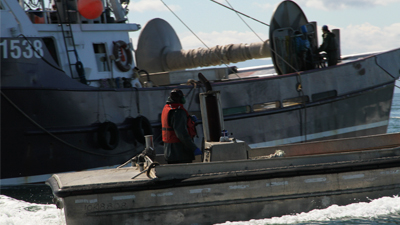
In mid-September, Damien Gillis had the rare privilege to capture this year’s astonishing sockeye fishery, off the south arm of the Fraser River. Amidst the largest Fraser sockeye return in nearly a century – some 35 million fish – Damien caught up with the commercial seine boat Snow Queen, hard at work. During one of the last openings of the season, Gillis documented the “set” of a lifetime for Captain Mitch Ponak and his crew: over 35,000 sockeye in one seine. It’s all covered here in vivid detail in this entertaining 6 min video.

Much has been said about this year’s unanticipated sockeye return – including erroneous claims from the fish farm industry that it somehow “proves” open net salmon farms aren’t adversely impacting wild salmon; if anything, it has raised more questions than it has answered. On this sunny September day, however, these amazing sockeye were a welcome sight and reminder of what healthy wild salmon runs mean to the communities, cultures, and economies of the entire BC coast and province – and of why we should be doing everything in our power to give these fish a fighting chance.

The Snow Queen

Share

Clayoquot Sound: Wild Salmon in Trouble

Share

Return to the scene of BC’s biggest environmental protest – more vulnerable today
than ever. Wild salmon populations in Clayoquot Sound are collapsing, and the Wild
Fish Conservancy is searching for answers, beginning with the open net salmon farms
that clog the fjords of this ecological treasure. The Common Sense Canadian catches
up with the scientific team in Clayoquot to discover what they’ve learned after two
years of important research.

Share