The
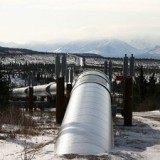
hearings for the proposed Enbridge Pipeline from the Tar Sands to Kitimat have
begun – the first of these having been held recently in Whitecourt Alberta,
with more coming coming to Kitimat on August 31 and Prince George on September
8. We’ll surely be hearing a lot from
the company about the employment this project would provide. That is the ever-present
argument in any debate where the environment is threatened.
As I said
in the question period after a recent speech, if the temporary employment
provided during construction trumps environmental concerns, we might as well
all go home.
I have no
doubt that employment will be a plus for this pipeline but we must remember
that it is temporary – the damage will be permanent. And let’s be clear on this
point: there will be leaks, and a long pipeline will be an open invitation to
terrorism. Moreover, there is no guarantee that the employment will go to local
British Columbians.
And it’s
the value to this province I think we should dwell upon for a moment.
We would
have a pipeline shipping Alberta crude to China, largely through very sensitive
land in BC. Where’s the profit for us? We take the certainty of damage to our
sensitive grazing land, added to which is the certainty of s spill on our
sensitive coast – and for what? I’ve heard nothing about big bucks for the
right-of-way. We’re not getting any part of the taxes which will be paid to
Alberta and Ottawa. We are the conduit for oil sludge benefitting international
oil companies, Edmonton, Calgary, Ottawa, and Beijing. Why the hell are we even
considering this?
I talk
about certainty rather than risk. That’s because a risk, without a limit on how
long it will continue, is a certainty waiting to happen.
Last May
I wrote an article for a Russian online paper, The Strategic Culture Foundation, which I think apropos – I hope
you enjoy it.
Tuesday
January 23, 2013
Today, with the weather cold and clear in
Washington, D.C., Barack Obama was sworn in for his second term after a
landslide victory where he carried all but two states. He had capitalized on
his stern warnings that the United States had to get, in American football
parlance, into a “hurry up offence” to wean itself off its reliance on oil as
offshore supplies were looking less and less reliable.
That very afternoon, reminiscent of the day Jimmy
Carter heard upon the inauguration of his hated rival Ronald Reagan that Iran
had released its American hostages, the new fundamentalist Peoples Islamic
Republic of Arabia (formerly Saudi Arabia) announced it was reducing its oil
exports to the US by10% each month until the US withdrew all support –
financial and military – of Israel. Mr. Obama pointed out that out of the 30
million barrels a day the US consumes (up since he first became president, in
spite of efforts to reduce consumption) Saudi Arabia supplied only 1.5 million
barrels – slightly more than Venezuela and about the same as Mexico. The
president, in warning about the crisis, took solace in the fact that its
largest supplier, at just under 3 million barrels, was their old and faithful
friend, Canada.
That day oil traded just under $200 per barrel, but
instantly went up to $225 on the news from Arabia.
Thursday,
July 4, 2013
On the nation’s birthday – and as oil broke through
the $300 mark – President Obama put the nation on a national emergency basis on
the announcement by President Chavez of Venezuela that “in light of continuing
Yankee interference with Latin American affairs, Venezuela will, in the absence
of ‘improvement’ by the US, cut off all oil supplies.” This, along with
continuing unrest in Mexico, was, in the president’s words, “very grave news
indeed.”
The New York Times in its lead editorial asked,
“What went wrong? What had happened to the will to reduce reliance on oil which
had peaked back in 2009?”
The Canadian ambassador, in an op-ed article,
pointed out that this was similar to the collapse of the cod fishery on the
east coast of Canada in 2002 when fishermen demonstrated unto near riot in
protest against the government closing the fishery, demanding the right to fish
even though there were none left. “Human nature,” observed the ambassador, “has
no end to its ability to go into denial.”
December
24, 2013
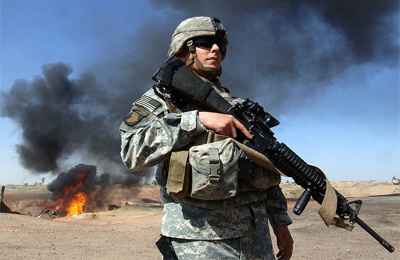 President Obama announced that earlier that day the
7th US
airborne had landed in Northern Alberta, Canada, near the “Tar Sands” and had
sent small contingents of troops into Edmonton and Victoria, the capitals of
the Canadian provinces of Alberta and British Columbia, respectively. Mr.
Obama, in a terse note to the Canadian ambassador said “no great nation, least
of all the United States of America, can tolerate any country cutting off its
oil supply. Once our imports from Canada are increased we will withdraw our
forces, leaving only a ‘token’ presence.”
(This was not, incidentally, the first time the US
had invaded Canada – it did so in 1775, and again in 1812 in the war known by
that date. Each time they were sent packing but in those days Canada was a
British colony and Britannia still ruled the waves.)
How could this have happened?
In Northern Alberta there is a huge mud pie –
except the mud is caused by oil not water. As early as 1956 when this author briefly worked for Imperial
Oil, the huge deposits of this goop were spoken about. (I left Edmonton upon
learning that, unlike Vancouver, my native city, Alberta has real winters).
The tar sands are prohibitively expensive to “mine”
and, besides, easy access to oil in Alberta would never end. All this changed
when oil went over $100 and, almost overnight, the Tar Sands became the new
“find.” Even though the oil was hugely difficult to extract and refine – and
the largest contributor to greenhouse gases in the world – it was huckedly buck
and away we go!
How did this lead to the US Canada border – called
the longest undefended border in the world – being violated?
You must go back to the spring of 2010 and an item
in the business news that China had invested $2 billion in these Tar Sands. A
pipeline to the Pacific Coast was needed and this from the builder: ”Enbridge
envisages two parallel 1,170-kilometre pipelines between northern Alberta and
Kitimat, B.C. One would carry 525,000 barrels a day of oil westward, largely
from the oilsands. The eastward line would transport 193,000 barrels a day of
imported condensate, used to thin heavy petroleum products moving by pipeline.”
There was hell to pay with aboriginal and
environmental groups that protested, sometimes physically, not only because the
pipeline encroached on wildlife grazing grounds but over the dangerously loaded
tankers moving south along the treacherous British Columbia coast. It was only
in August 2012 that the Supreme Court of Canada, in a rare move which caught
everyone by surprise, turned aside aboriginal complaints. This was immediately
followed by the federal government ordering construction to begin.
Up until this time no one really foresaw that this
would mean trouble. After all, all oil from the tar sands went south of the
border; what could go wrong?!
China
was the problem. Most of the oil through the pipeline was destined for China.
The US government needed this oil and meant to get it. For two years Obama
threatened dreadful things including high tariffs against Canadian goods,
notwithstanding NAFTA. Nothing worked.
As
the short but devastating debate moved on, Canada asked China to intervene,
thinking that the huge US debt to that country would help. China reminded
Canada of two things: 1. It’s a hell of a long way from China to the Tar Sands;
2. While China was the US banker, it had to be remembered that a bank’s largest
asset is what is owed to it – that if China were to reduce the value of the US
dollar it would be, so to speak, pooping in its own nest.
Thus
it came to pass that for third time the US invaded Canada, and this time there
was no one there to help.