
Category Archives: Energy and Resources

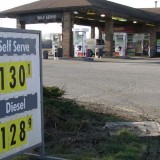
A gas station in Delta shows the recent surge in fuel prices

Oil Roller Coaster Gets Wilder

Share

With the price of oil
soaring in recent weeks, politicians around the world are scrambling
to react. The price of the benchmark ‘Brent’ crude oil has
increased by almost 90%
in just 12 months
, to around $115 a barrel. Now some
speculators are betting that the price is headed towards $200
a barrel
, which would spell global economic chaos.

In Spain, the
government has already moved to reduce the highway speed limit and
lower train fares to save fuel. In the UK, the Conservative coalition
government was proposing to increase the speed limit but is now
suddenly reversing course and looking to take sudden action to cut
oil consumption. According to the Observer,
UK energy secretary, Chris Huhne, says they don’t have much choice.
“Getting off the oil hook is made all the more urgent by the
crisis in the Middle East. We cannot afford to go on relying on such
a volatile source of energy.” The problem for the UK government
is that they were counting on cheap oil, and made no preparation for
anything else.

The fact is that our
governments were warned about the potential for a destructive cycle
of oil price spikes and economic crashes years ago. For example in
the wake of the 2004 oil price spike, the US Department of Energy’s
Hirsch
Report’
warned of exactly this likelihood. Hirsch
recommended an immediate crash program to reduce US dependence on
oil, noting that even 20 years would be a tight time frame to make
the necessary changes.

In 2005, the
International Energy Agency published Saving
Oil in a Hurry
which focused on emergency
measures that could be taken to rapidly reduce transportation oil
consumption with some advance preparation. Recommended measures
include having plans to quickly create networks of bus and cycling
lanes. But it seems that most governments are not prepared, and are
now flailing about instead of implementing plans.

In BC, governments are
still acting as if oil was going to be cheap and plentiful forever.
Instead of taking logical steps to reduce oil dependency and protect
families from oil price shocks, the Campbell administration has spent
more and more on road and freeway expansions. For example, according
to Transport
Canada
, in 2008/2009 the BC provincial government
spent over $2.2 billion on roads and Bridges, up from $1.2 billion in
2001/2002. Much of this was spent on roadway expansions. In
contrast, the provincial government reported spending only $660
million on transit and nothing on BC railways.

Some of these roadway
expansion projects, such as the Golden Ears and Port Mann freeway
bridges, are supposed to be paid for by tolls. But even before the
most recent oil price spike, traffic and toll revenue was far below
what is needed to break even on the Golden Ears Bridge so TransLink
funds have been diverted from transit to pay for a mostly empty
freeway bridge. The new Port Mann Bridge and freeway expansion
represents $3.1 billion dollars that could have been invested in
transportation for the future such as electric
trains
, light rail and trolley buses.

The Port
Authority recently restarted plans to build another
container terminal
on the environmentally sensitive
Roberts Bank in Delta, on the assumption that international trade
will increase drastically in the coming decades. Our ports have a
large amount of excess capacity after Port Metro Vancouver recently
increased capacity at Deltaport by 50 percent and a new container
port was opened in Prince Rupert. The director of SFU’s urban
studies program, Anthony Perl, maintains that with
increasing oil prices long-distance trade
will decline
in the future rather than increase.

It is time to admit
that the age of cheap and easily accessible oil is over. The
remaining oil and petroleum gas is largely ‘unconventional’
supplies such as the tar sands. The cost of production of these
sources is high, but the environmental and social costs are even
greater concerns. For example, much of the gasoline and diesel we
burn in BC is now produced from tar sands bitumen – a process that
uses huge amounts of petroleum gas. Much of the gas burned in the tar
sands comes from BC and is extracted by hydraulic
fracturing or ‘fracking
‘ which result in
widespread water contamination.

The problem is not only
that our politicians are not prepared to make the changes needed to
overcome our excessive oil dependence. It is also that as soon as the
oil price roller coaster heads down hill again, they will once again
try to convince themselves that nothing significant has changed.

Like with global
warming, our leaders are mainly not prepared to lead. Ordinary people
are going to have to propose real solutions and oppose the most
destructive megaprojects our politicians dream up – such as the
North and South
Fraser Perimeter Road
freeways.

Share

Several injured in Alberta oil well blast

Share

From the Montreal Gazette – March 7, 2011

by Brent Wittmeier

EDMONTON — A 24-year-old man is in critical condition after an explosion at a sweet gas well southwest of Edmonton.

The
explosion happened at about 11:30 a.m. on Monday at a Husky Energy site
near the hamlet of Robb, Alta., said Occupational Health and Safety
spokesman Barrie Harrison. There were no fatalities, Harrison said, and
OHS is investigating the incident.

An air ambulance
transported a 24-year-old man in critical condition to the University of
Alberta hospital, said spokesman Cam Heke. Other patients were also
transported to Edmonton via fixed wing aircraft and ground ambulance,
Heke said.

The RCMP reports 12 injuries, saying patients
were transported to hospital in nearby Edson, Alta., by ground
ambulance. Three were sent to a burn unit in Edmonton. The Edson Fire
Department extinguished the fire, and RCMP secured the scene, said
spokeswoman Doris Stapleton.

The incident was caused by a
flash fire, said Graham White, spokesman for Husky Energy. The injured
patients were contract employees.

White called it “an extremely rare” occurrence and said the company has sent an investigation team to the site.

The
men were preparing to fracture the well with propane, said Energy
Resources Conservation Board spokesman Bob Curran. Fracturing involves
sending high pressure liquids down a well bore to cause fissures in
dense rock, allowing trapped natural gas to escape into the well and be
pumped to the surface. Curran said it’s common to use propane in
fracking operations.

He said no natural gas was released in the explosion.

The site is approximately 40 kilometres southwest of Edson and 265 kilometres southwest of Edmonton.

Read original article

Share

Enbridge Ready for its Close-up: Pipeline Sparks Creative & Cultural Movement

Share

If there’s one thing – and I do mean one – that we can thank Enbridge for, it’s the way the company’s plan to bulldoze a massive crude oil pipeline from the Alberta Tar Sands to BC’s spectacular and rugged coast has inspired an increasingly creative and vibrant cultural movement in opposition to the project. It seems the company is caught in a Chinese finger trap – the harder they sell their scheme, the stronger the resistance grows. Indeed, the usual inducements – temporary jobs, bonus payments, and the recent dangling of 10% profit sharing to First Nations along the pipeline and tanker route – don’t appear to be gaining any traction this time around.

On the contrary, the project is awakening and drawing together coastal indigenous communities – celebrating their culture and connection to the land and water threatened by the proposal. It has attracted global focus from world-class photographers and major international media outlets. It’s helping to forge unprecedented close-knit relationships between First nations, conservation groups, and citizens around the province. And it’s spawned a boutique creative genre unto itself, characteristic of the new media era in which we live. That is, a plethora of films, photography, animation, music, and other artistic endeavours dedicated to showing Canadians and the world the incredible places and people at risk from the pipeline and associated supertankers.

In other words, this revolution is definitely being televised…and screened, streamed, podcast, social networked in powerful ways – and it’s only getting started. It has been my distinct privilege to be some small part of it.

This whole creative movement was on full display during a special event held as part of the Vancouver International Mountain Film Festival last month. A crowd of some 700 people crammed into the Centennial Theatre in North Vancouver to take part in “spOILed”, an evening filled with films, photography, and amazing guest speakers, each with an important story to tell (watch highlight video – story continues below).

Looking at the packed program (the event ran from 6:30 to nearly 11 o’clock) I wondered if it wouldn’t be a tad overwhelming for the audience – yet nearly everyone stayed to very end. And with good reason. They were treated to a veritable visual feast – juxtaposing spectacular natural images with the Tar Sands and myriad oil-related disasters of late that have only reinforced the concerns of Enbridge’s critics (three of these big spills from last year came from Enbridge itself, including the infamous disaster on Michigan’s Kalamazoo River).

The crowd also heard from some some terrific speakers throughout the evening, expertly emceed by one of the campaign’s tireless leaders, conservationist and photographer Ian McAllister of Pacific Wild. The event was co-sponsored by the International League of Conservation Photographers, a group of the world’s top photojournalists – many of them regular National Geographic Contributors – who journeyed to the Great Bear Rainforest last year. A sampling of their stunning work was on display throughout the evening.

Among the event’s highlights was renown photographer Garth Lenz – whose work Alberta bitumen cheerleader Ezra Levant has referred to as “Tar Sands Porn” (a high compliment, considering the source). Lenz has produced some of the most iconic images of the world’s largest industrial project, which he shared with the audience during a compelling presentation on the other end of the pipeline. An exhibition of Lenz’ work opened the day after this North Vancouver event at a major gallery in Los Angeles.

The audience was also treated to a presentation by enigmatic adventure filmmaker Frank Wolf on his 2,400 km journey from the Tar Sands along the proposed pipeline route to BC’s coast. Wolf previewed his upcoming feature documentary on the expedition – which he and a colleague made through a combination of hiking, paddling, and cycling over several months last summer.

Norm Hann, a veteran wilderness tourism guide in the Great Bear Rainforest, discussed his own unique journey by paddle board – a surf board-type device atop which he paddled 400 km along the the proposed pipeline route. He too is producing a documentary titled “Stand Up for the Great Bear Rainforest”.

Among the numerous other speakers throughout the evening was Marven Robinson – a spirit bear guide from Hartley Bay and impressive photographer in his own right. Robinson was instrumental in initiating the iLCP expedition to his traditional territory. He and Ian McAllister were the stars of the evening’s highlight – a new feature documentary by EP Films on the iLCP expedition and Enbridge issue. The film, SPOIL, claimed the environmental film prize at the Vancouver International Mountain Film Festival that week. SPOIL also features renowned Canadian photojournalist Paul Nicklen, who worked with Robinson on a forthcoming cover spread for National Geographic on the sprit bear.

South African photographer Thomas Peschak – one of the world’s top underwater cameramen and chief photographer for the Save Our Seas Foundation – reported in via video address from his latest shoot in the Middle East, highlighting some of the amazing work he did recently capturing the underwater life of the Great Bear Rainforest during the iLCP expedition.

Closing out the night was a stirring speech by Heiltsuk First Nation leader Frank Brown, thanking the above filmmakers and photographers for their work exposing the Enbridge battle to the world and calling on non-aboriginal people to join forces with First Nations to help protect the Great Bear Rainforest from oil tankers.

These films and projects are just a sampling of the creative bonanza Enbridge’s proposal has unleashed. And as the company, provincial and federal governments show no signs of throwing in the towel, one can only imagine the cultural connections and creative resistance they will continue to inspire.

So, smile, Enbridge: You’re on candid camera.

Share

Libya’s Gadhafi threatened to nationalize Petro-Canada operations: WikiLeaks

Share

From the Winnipeg Free Press – Jan 31, 2011

by Jim Bronskill

OTTAWA – A newly leaked U.S. diplomatic note says Libya
threatened to nationalize Petro-Canada’s operations in the North African
country over a spat with the Conservative government.

It’s the latest revelation in a bizarre international saga that first grabbed headlines two years ago.

Libyan leader Moammar Gadhafi cancelled a late September 2009
stopover in Newfoundland after Foreign Affairs Minister Lawrence Cannon
promised a tongue-lashing for the hero’s welcome Libya extended to a man
convicted in the Lockerbie bombing.

The U.S. cable, obtained from WikiLeaks by British
newspaper the Daily Telegraph, says Libya’s state oil company called in a
senior Petro-Canada official with a threat to nationalize the firm’s
operations in Libya if Canada did not apologize.

At the time, Petro-Canada had just merged with fellow Canadian oil giant Suncor.

The cable says Canada’s ambassador to Libya, Sandra
McCardell — whose name is misspelled throughout — told the U.S. Embassy
in Tripoli the Libyans demanded the apology within 24 hours.

“McArdle said she has advocated some kind of public and
private statements from the Canadian (prime minister) and (foreign
minister), which would indicate a Canadian welcome for the Libyans and
hopefully turn the situation around,” the cable says.

“Libyans here are frantically calling the Canadian
Embassy, concerned that if the issue is not resolved, Gadhafi’s trip
home will be complicated by lack of a place to stop for necessary
refuelling.”

The Sept. 28, 2009, cable also says McCardell told her
U.S. counterpart that Ottawa had initially planned to refuse the
eccentric Gadhafi permission to stop on Sept. 29-30 in Newfoundland en
route to Spain from the United Nations.

“On instructions from Ottawa, McArdle said that she
informed the Libyan government in mid-September that Gadhafi was not
welcome to visit Canada at this time,” the cable says.

It adds that McCardell, who had just arrived in Tripoli
and had not yet presented her diplomatic credentials, seriously believed
she could become persona non grata or have her agreement revoked.

“Fearful of delivering bad news to Gadhafi, McArdle
explained that the notoriously slow Libyan bureaucracy delayed passing
Ottawa’s message to the Leader for several days.”

In the meantime, Canadian companies with business
interests in Libya “launched a furious lobbying effort” and persuaded
Stephen Harper’s Conservative government to allow the trip to go
forward, the note says.

“However, McArdle said that the Canadian government’s
precarious domestic situation and upcoming elections pressed the Foreign
Minister (Cannon) to go public with his very stern message.”

Though Gadhafi’s government did not follow through on its
apparent threat to take over Petro-Canada’s operations, a second
WikiLeaks cable obtained by the Daily Telegraph indicates it doled out a
milder punishment.

The Libyan government issued an order Sept. 30, 2009,
forcing Petro-Canada and its operator, Libya’s Hrouj company, to cut
production by 50 per cent, the note says.

The move came less than a day after McCardell had told
the U.S. ambassador that she and Libya’s foreign minister had settled
the issue.

The U.S. cable says while reasons for the production cut
were unknown, a source whose name is excised from the note “intimated
that the order had come from the highest levels, i.e. Moammar Gadhafi
himself.”

The move may be a “cheap” way for the Libyans to punish Petro-Canada for Ottawa’s gruff words, it adds.

Diplomats from Britain and Italy, nations with significant investments in Libya, appeared unsettled by the news, the note says.

Indeed, the earlier cable reveals both Britain and the
United States were prepared to intervene on Petro-Canada’s behalf “to
emphasize that it is not good for Libya to threaten existing and
potential investors and violate the sanctity of contracts with such
abandon.”

“The situation between the Libyans and the Canadians
reflects vintage Libyan policy to strike hard at any quarter that
insults the Leader publicly.”

In October 2009, Libya retaliated further, making it
clear that Canadian travellers were not welcome in the country by
refusing to grant visitor visas.

Read original article

Share

Reuters: City of Buffalo Bans Hydraulic Fracturing

Share

Feb 8, 2011

(Reuters) – The
city of Buffalo banned the natural gas drilling technique of hydraulic
fracturing on Tuesday in a largely symbolic vote that fuels debate over
the potential harm to ground water from mining an abundant energy
source.

The city council voted 9-0 to
prohibit natural gas extraction including the process known as
“fracking” in which chemicals, sand and water are blasted deep into the
earth to fracture shale formations and allow gas to escape.

The ordinance also bans storing, transferring, treating or disposing fracking waste within the city.

No
such drilling projects had been planned in Buffalo, though city
officials were concerned that fracking waste water from nearby
operations was reaching the city sewer system.

Backers
of the measure hope it will help build pressure against fracking, which
environmentalists claim endangers ground water from leaking chemicals.

Pittsburgh, Penn., has enacted a similar ban.

Industry
supporters say fracking is proven safe and natural gas from sources can
provide a much-needed domestic energy source. For an index of shale gas
companies, double-click on.

The
Marcellus Shale formation underlies much of Pennsylvania and parts of
surrounding states including western New York. Geologists estimate it
could supply U.S. natural gas demand for 20 years or more.

The
U.S. Environmental Protection Agency (EPA) is studying the impact of
fracking and on Tuesday submitted a draft of its study to the agency’s
Science Advisory Board for review.

Initial Findings from the study are expected to be made public by the end of 2012.

Read original article

Share

The Tyee: Unethical to Brand Oil Sands Ethical?

Share

From the Tyee.ca – Feb 10, 2011

by Colin Campbell and Andrew S. Wright

Ezra Levant’s powerful but critically flawed argument
re-branding Alberta’s oil sands as “ethical” appears to be re-shaping
Canadian public policy as Prime Minister Harper and Environment Minister
Peter Kent adopt the catch phrase — despite both ministers having not read
the original work. As the catch phrase “ethical oil” enters the lexicon
of Canadian political language, the need for a productive facts-based
debate in Canada, a debate leading to real conservation solutions,
appears to be more urgent than ever.

This is especially true in British Columbia
where candidates in the Liberal party leadership race have
systematically failed to embrace discussion of environmental and
conservation policies as an integral part of their policy platform
offerings.

Critical debate is important because
arguments that the oil sands contain almost half the world’s total known
oil reserves and will therefore ensure world peace, global food and
energy supplies for the next half century are dangerously flawed.
Current oil sand production of two million barrels a day is technically
limited by water availability to approximately a maximum of five million
barrels a day, a mere fraction of the world’s daily consumption. This
misrepresentation promises economic stability yet ignores global (peak)
oil supply concerns, the technical upper limit of oil sand production,
and climate change. Alberta’s oil sands development will not deliver
global economic stability in the face of these issues.

Pipelines that import risk

At risk is our often forgotten dependency
on the services of healthy natural systems which are as important as
economic benefits, and in ignoring this reality the first of many
weaknesses of the argument is exposed. In examining the benefits of the
proposed Enbridge pipeline to Kitimat, consider the grizzly bear family,
photographed in an estuary not 10 kilometres from the proposed west
coast tanker route that penetrates the heart of the Great Bear
Rainforest. This area provides many valuable food-based sustainable jobs
in the salmon, halibut and shellfish fisheries. An accident comparable
to the Exxon Valdez spill or the Gulf of Mexico eruption in these
treacherous waters would render this estuary and the ecosystems that
support rich wild fisheries in the region fallow. The “at risk” grizzly
family is a metaphor for our own lives. Pipelines in these pristine
environments import risk for which there is no insurance — just the
cost of desecration.

Levant’s notion of ethical oil involves
little more than choosing “to buy oil from nice guys”. It comforts us by
redirecting our judgment to the dealer and away from the consequences
of the deal that we are making. It is not this simple. If an oil source
is to be judged as ethical, then the list of considerations made must
include its long term greenhouse gas emissions, contributions to ocean
acidification, the rate at which a major watershed is made toxic and the
cumulative impacts on future generations. We should also consider
buying preferentially from nations that use their oil revenues to
develop renewable energy sources.

Furthermore the arguments’ rudimentary moral appraisal implies no
framework in which oil from sources with the lowest carbon footprint are
utilized first, their revenues applied to fuel switching strategies,
thereby deferring the worst oil for last use (hopefully never). Until
means to accurately measure and compare the virtues of oil source A
versus oil source B are developed we must ask the question, is it
unethical to brand Alberta’s oil sands as ethical?

Levant’s thesis assumes that we must
continue to use oil, ignoring the environmental impacts and offers
permission to proceed by establishing the good character of the vendor.
This massive (unethical?) distraction is compelling because human nature
will seek an honorable reason to avoid resolving a pressing problem and
the hard endeavor of seeking progressive solutions.

Read full article

Share

PetroChina buys half of Encana’s Cutbank stake for $5.4 Billion

Share

From the Vancouver Sun – Feb 10, 2011

PetroChina Co., the nation’s biggest energy producer, agreed to buy a 50 percent stake in Encana Corp.’s Cutbank Ridge assets for C$5.4 billion ($5.4 billion), giving the Chinese company its first gas asset in North America.

The acquisition would give PetroChina daily production of 255 million cubic feet of natural gas from 635,000 acres in the Canadian provinces of Alberta and British Columbia, Encana said in a statement today. The companies will also form an equal venture to increase output, the Beijing-based producer said.

The deal would bring the total value of energy acquisitions by Chinese companies since last year to about $46 billion to supply the world’s fastest-growing major economy. The Canadian transaction follows PetroChina’s decision last month to form a venture with U.K. refiner Ineos Group Holdings Plc to process crude oil at plants in Scotland and southern France.

“PetroChina is now buying assets in developed countries like Canada and the U.S. as well as developing nations as part of its strategy to become an international oil major,” said Shi Yan, an analyst at UOB-Kay Hian Ltd. in Shanghai. “The focus on gas is because demand for the fuel in China is growing. Gas demand is rising by about 20 percent a year and the government is encouraging its use because it’s cleaner.”

China’s government wants to triple the country’s use of gas, which pollutes less than oil and coal, by 2020 and the fuel to account for about 10 percent of energy consumption. PetroChina plans to spend at least $60 billion on global assets in the next decade to increase reserves and production. The Encana deal, announced after market close yesterday, requires approval from the Canadian and Chinese authorities.

Share Gains

PetroChina has risen 25 percent in Hong Kong trading in the past year, outpacing the 17 percent increase in the benchmark Hang Seng Index. The stock fell 3.8 percent to close at HK$10.54 yesterday. Encana dropped 1.9 percent to C$30.65 on the Toronto Stock Exchange.

“By combining resources with PetroChina in this joint venture, we would expect to recognize additional value through accelerating our pace of development,” Encana Chief Executive Officer Randy Eresman said in yesterday’s statement.

The Calgary-based company in 2009 spun off Cenovus Energy Inc. to focus on natural gas as prices for the resource began falling because of oversupplies generated by an onshore drilling boom in North America.

Encana shares have gained 5.4 percent this year as investors expect ventures with Chinese competitors would shelter the Canadian company from the slump in natural gas prices, said Daniel Pratt, director of oil and gas equity research at Ticonderoga Securities, before yesterday’s announcement. Encana’s shares gain is double that of the Standard & Poor’s/TSX Composite Index this year and tops the 2.8 percent increase for the Canadian energy index.

Read full article

Share

How Alberta’s $16-billion Electricity Scandal Plugs into Oil Sands

Share

From TheTyee.ca – Feb 8, 2011

by Andrew Nikiforuk

Two years ago, Alberta’s Transportation Minister Luke
Ouellette described Joe Anglin, a former U.S. Marine and telephone
transmission engineer, as “dangerous individual and a trouble maker.”

At a conference of the Alberta Urban
Municipalities Association, Ouellette also wondered aloud “why someone
hadn’t dealt with [Anglin].”

It was a remarkable declaration and one for which neither Ouellette nor the Progressive Conservative Party has ever apologized.

But it’s not hard to understand why a
government ruled by one party for 40 years and now beset by political
scandal deeply fears the political crusader.

Over the last six years the 55-year-old
father of two has arguably become the most persistent and informed
critic of the government’s controversial plans to build $16.5 billion
worth of transmission lines and all largely for U.S. export.

“It’s all driven by the oil sands and the
failure of electricity deregulation,” adds Anglin. “I don’t think
Alberta’s politicians are bad or evil but they are incompetent and
dumber than you’re average monkey. I can’t tell you how many times I’ve
caught them lying.”

Three bills got blood boiling

Anglin first made a name for himself by
exposing systematic regulatory corruption on transmission approvals with
a series of legal challenges that dramatically forced the break-up of
the province’s energy regulator in 2007.

Then the businessman and his 1,000 member
Lavesta Area Group focused their attention on the political fallout:
three unprecedented pieces of legislation (Bill 19, 36 and 50) that
squarely limited public dissent on transmission issues and concentrated
all decision making power in the provincial cabinet.

In some government circles one of the bills (Bill 50), designed to end any landowner legal challenges to transmission lines, is even known as “the Anglin Bill.”

Both detractors and admirers alike call
Anglin a determined pit bull if not a scrapper who also enjoys nothing
more than a good fight.

“The only reason that Anglin is dangerous,” explains prominent St. Albert lawyer Keith Wilson, “is because he has so much information. He’s exposed how corrupt the government’s transmission line really is.”

Read full article


Share

Kinder-Morgan vs Enbridge: Pipeline Race Heats Up

Share

From the Globe & Mail – Feb 3, 2011

by Nathan Vanderklippe

CALGARY — Kinder Morgan Canada is
accelerating plans to boost deliveries of Alberta crude to the West
Coast, pressing ahead with new pipeline capacity that raises the stakes
in a high-profile race to export Canadian energy to Asia.

The company is preparing to accept bids for a substantial expansion
of its 1,150-kilometre Trans Mountain pipe, which connects Edmonton with
British Columbia’s Lower Mainland. There, oil can be loaded on ships
and sent to destinations in China, South Korea and California.

If built, that new capacity will provide an important new outlet for
Canadian energy companies. The industry has increasingly called for an
alternative to its dependence on central U.S. markets, and filled
growing numbers of tankers bound for Asian markets in recent years. With
North American demand stagnating, Canada’s oil patch has directed
greater attention toward Asia’s rising energy thirst, amid hopes that
greater access to a vibrant new market will spur more attractive crude
prices.

For Kinder Morgan, a system expansion would kick-start an effort to
beat out growing competition for an Asian connection. Both of Canada’s
railway companies have proposed “pipelines on rail” to take oil to the
West Coast, and Enbridge Inc. is seeking approval for its $5.5-billion
plan to build a new pipeline called Northern Gateway across northern
B.C.

But expansion plans will expose Kinder Morgan to the fierce
opposition that has greeted Northern Gateway – especially since Trans
Mountain feeds tankers that sail past Vancouver, the birthplace of
Canada’s environmental movement. Kinder Morgan has yet to seek
regulatory blessing for its expansion.

The company has been spurred to action, however, by mounting demand
for a system that forms the only existing connection between Canadian
crude and offshore markets.

It plans to hold an “open season” later this year that will allow it
to solicit oil companies for commitments to ship on new capacity it
hopes to add by 2014 or 2015.

“What we’ve got to assess with the market is how big is that
expansion,” Kinder Morgan Canada president Ian Anderson said in an
interview.

“We’ve talked about going from 300,000 to 380,000 as the next step,”
he said. “But if we get interest for anything over 80,000, we could work
the engineering to try and design the expansion to accommodate it.”

Kinder Morgan has long discussed plans to expand the Trans Mountain
system, which it ultimately hopes to bring to 700,000 barrels a day. In
2008, it completed a $750-million project that added 40,000 barrels of
pipe capacity by twinning the system through Jasper National Park.

Read full article

Share

Scientist Quits Provincial Panel on Tar Sands Over Government Muzzling

Share

From The Calgary Herald – Feb 2, 2011

by Kelly Cryderman

CALGARY – Just days after the makeup of a provincial panel
meant to revamp oilsands monitoring was announced, an American member
has quit saying there’s not enough scientists in the group and the
Alberta government wants to muzzle free discussion.

“I’m
concerned that First Nations may think this is yet another snow job by a
bunch of experts who speak a lot of technical speak,” said Helen
Ingram, a University of California-Irvine professor emeritus who
specializes in public policy on water resources.

However,
Alberta Environment argues there are eight scientists on the panel with
PhDs, and rules governing disclosure of information by panel members
have yet to be finalized.

Ingram and 11 others were named
by Alberta Environment Minister Rob Renner last Thursday as members of a
panel to provide recommendations for creating a “world-class
environmental monitoring system” for the oilsands.

The
group, which meets for the first time next week, is co-chaired by Hal
Kvisle, who retired as president and chief executive of Trans­Canada
Corp. last year, but is still an adviser to the pipeline company.
TransCanada moves thousands of barrels per day of oilsands products to
market and is seeking environmental approval for the $7-billion Keystone
XL project to transport more bitumen to U.S. refiners.

The
other co-chair is Howard Tennant, the former president and
vice-chancellor of the University of Lethbridge. Other members include
public health experts, biological science and geology professors,
environmental consultants, a vice-president from the Canadian
Association of Petroleum Producers and a former adviser to Prime
Minister Stephen Harper.

Even though she’s “really . . . concerned that the tarsands get appropriate monitoring,” Ingram gave her notice on Tuesday.

Her
three main concerns were that the panel schedule set doesn’t allow for
her to attend key meetings, there are too few physical scientists – such
as hydrologists – on the panel, and early instructions suggested she
and other members would not be able to discuss oilsands issues with
scientific colleagues or others without first getting the permission of
the minister.

Ingram said she’s used to some level of confidentiality while sitting on panels, but this seemed a step too far.

Read full article

Share