
Story on salmonaresacred.org about the Get Out Migration organized by Alexandra Morton, which started April 23, and arrives in Victoria on May 8. Read article
Story on salmonaresacred.org about the Get Out Migration organized by Alexandra Morton, which started April 23, and arrives in Victoria on May 8. Read article
A private prosecution previously laid by biologist and activist Alexandra Morton against Marine Harvest Canada was taken over by the federal Justice Department. By Judith Lavoie in the Vancouver Sun. Read article
Tthe Kwicksutaineuk/Ah-Kwa-Mish First Nations hope to convince the courts that government has so badly mismanaged the fish-farming industry that native rights have been violated. By Mark Hume in the April 14, 2010 Globe and Mail. Read article
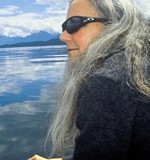
Damien Gillis guest hosted Vancouver Co-op Radio this morning and discussed with Alexandra Morton her upcoming “Get Out Migration.” The biologist and long-time critic of open net salmon farms and their impacts on BC’s wild salmon kicks off her historic march down Vancouver Island next week on Earth Day. Morton discussed the growing public movement to save wild salmon – and growing list of events planned along the migration.
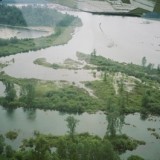
The Silvermere Island and lower Stave River ecosystem comprise exceptional, rare, and bio-diverse ecological communities and habitats within the lower mainland. Located about 7 kilometres west of Mission, the Stave River estuary is one of the largest spawning concentrations of salmon along the Pacific coast of North America already in direct proximity to an urban environment. Furthermore, despite its extraordinary fisheries values, the lower Stave River basin also has numerous other biological and ecosystem features that make it exceptional and these are intimately connected to the marine-derived nutrients supplied by the salmon carcasses.
Over the past few decades, the Stave River Estuary has weathered a number of environmental insults including the creation of Silvermere Lake in the downstream floodplain formed by constructing 2 causeways to Silvermere Island (which resulted in roughly 50% loss in wetland area of the lower Stave River).
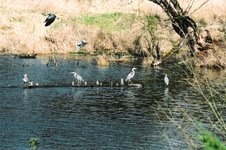
Despite this historic disturbance, Silvermere lake and Silvermere Island are currently inhabited by 113 animal species, including several species at risk: endangered painted turtle, red legged frog, bald eagle (active nest), barn owl (active nest), western screech owl, double crested cormorant, and great blue heron. Almost the entire site possesses the potential to contain blue-listed plant communities. The lake is used by a myriad of migratory birds and and Silvermere Island is an important wildlife refuge.
 Significant rehabilitation of the aquatic ecosystem in the Stave River downstream of the Ruskin damn facility has been undertaken by BC Hydro and Fisheries and Oceans Canada over the last two decades. Extensive expenditures at the taxpayers’ expense were required to undertake this rehabilitation. Following the implementation of the fish-friendly system operations by BC Hydro and hatchery augmentation in the mid-1990s, the run of chum salmon increased from an escapement of a few thousand to over 0.5 million fish in some years.
Within the direct proximity of Silvermere Island, there is now one of the largest chum salmon runs in the lower Fraser River. Other species of salmonids such as coho, steelhead, and char utilize this aquatic ecosystem and some of these species have been enhanced either through flow considerations, habitat rehabilitation or hatchery stocking.
But this critical ecosystem is under grave threat. Genstar Development Corporation has proposed a major housing project along the perimeter of Silvermere Lake (the Peninsula) and on Silvermere Island itself. The development of this housing project is to be situated within the lower Stave River watershed and is adjacent to, and partially on, its historic flood plain. About 94 houses have been proposed for the Island and 14 more lots are to be developed on the Peninsula, which is part of the northern causeway of Silvermere Lake. Access to the island would require construction of a 2-lane road, through the wetlands to the island.
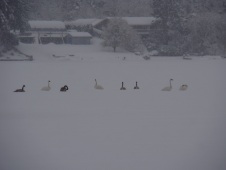
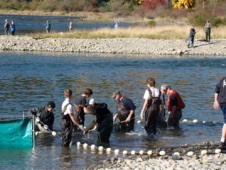 This lake development constitutes part of the large-scale loss of wetlands (greater than 90%) in the lower Fraser Basin that has occurred over the last 100 years. This project will constitute a further and major impact to these wetlands by increasingly isolating the Silvermere Lake portion of this ecosystem from the extant, relatively intact active floodplain of the lower Stave River, as well as interfering with riparian functions and adding extensive human activities (e.g., vehicle traffic to and from the Island).
The devastating environmental impact of constructing a major road to Silvermere island through a wetland area, clearing vegetation to build houses, and the impacts of human occupation in this sensitive area were described by senior scientist Dr. Marvin Rosenau as “one of the most environmentally damaging development projects that (he) had occasion to review” (MWLAP, 2003). Shortly after release of his report, Dr. Rosenau was removed from his position within the Ministry of Water, Land and Air Protection (WLAP) as a fisheries habitat scientist. He was told that there was nothing wrong with his science, but that his report damaged the developer’s ability to proceed and therefore he would be given a “time-out” by the ministry. He was also told the local MLAs were already unhappy with his reports of impacts to salmon from large-scale aggregate removal in the Fraser (see Special Report: Fraser gravel mining about money not safety by Damien Gillis on thecanadian.org).
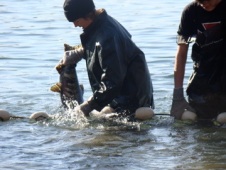
The politically motivated removal of Dr. Rosenau has sent a chill in the provincial environment ministry. A clear message has been sent that scientists could lose their jobs if they criticize development projects, a possibility referred to as being “Marvinized” by those in the ministry.
Even federal scientists from the Department of Fisheries and Oceans appear reluctant to take a stand to protect the Stave, and have allowed considerable disturbance to the area without laying charges. In Jan. 2004 the developers cleared the peninsula portion of Silvermere to within 15 meters of the lake, and deposited extensive preload without authorization from DFO. No charges were laid, and no reparations were required.
In Feb. 2006, the Stave Valley Salmonid Enhancement Society was funded by Genstar to conduct an Invasive Species Removal Study. Heavy equipment was moved onto Silvermere island and several gravel roads were constructed, some as close as a meter from the lake. Again, DFO did not intervene.
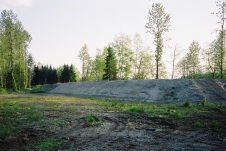 The developer’s application for harmful alteration, disruption or destruction (HADD) of fish habitat finally triggered a federal Environmental Assessment (CEEA) by DFO and Environment Canada in 2007 but was put on hold the day it was initiated on request of the developer. On Dec. 22, 2009, the CEAA (Canadian Environmental Assessment Agency) hearing was terminated by DFO without having been completed. DFO advised concerned residents to contact Environment Canada who stated that should species at risk be inadvertently killed by heavy equipment, it is not considered an offense by the ministry.
On Jan. 18, 2010, less than a month after termination of the federal assessment, Mission Council voted unanimously to vary their Streamside Protection Regulation (SPR) Bylaw on request of Genstar. Section 108 of Mission’s Zoning Bylaw would have required that a setback of 30 metres from the high water mark of Silvermere Lake be protected.
Instead of upholding the bylaw, council voted, notwithstanding recommendations by staff that this would likely result in reducing the protected areas in half to 15 metres, opening the door to residential development on Silvermere island.
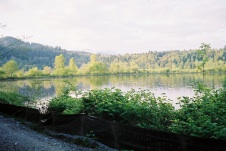
Political interference in scientific assessments such as Silvermere underlies the current precipitous decline in wild pacific salmon stocks and places the financial interests of industry over the public’s interest in critical habitat conservation. A stormy combination of damaging development projects, irresponsible aggregate dredging of the Fraser River and open net fish farms spell death by a 1000 cuts to wild Fraser salmon and the wildlife that depends on it. It would appear that DFO has learned nothing from the devastating loss of cod stocks on Canada’s east coast. Clearly, the fact that the Silvermere project is even being considered again by local and senior governments signifies a breakdown in government accountability and a reluctance, or inability, to ensure the public’s interest in the environment is protected.
I would like to acknowledge Dr. Marvin Rosenau whose detailed scientific review of the impact of development in the Stave River ecosystem informed the technical aspects of this article.
{gallery}k2/galleries/23/:::1:2:lytebox{/gallery}

I will only say it once, I promise you!
“I told you so”, which I direct at former minister John Van Dongen – who gives “stubborn Dutchmen” a whole new meaning – and at Gordon Campbell. And the subject, in case you didn’t guess, is Atlantic salmon fish cages on the coast of British Columbia.
Let me lay out the options these two face: they’re either a) too dumb to understand what I, and bless her, Alexandra Morton (and others as the issue gathered steam) were telling them; or b) they deliberately refused to look at the evidence, refused to betray their corporate donors like Norway’s Marine Harvest, and for nearly a decade lied through their teeth to us the public.
Now, the “too dumb” choice might apply to Van Dongen, who is easily the thickest politician I’ve ever known – and believe me that covers a lot of territory. But no one would call Gordon Campbell stupid – joined at the hip to the far rightwing Fraser Institute. An anti-environmentalist, for sure; a serial teller of falsehoods, you bet. But not stupid.
Let me say that I take no pleasure in being proved right. I simply cannot, naively perhaps, understand why a premier would want to jeopardize the wild fish in our province.
Early on, Van Dongen, then the Minister of Agriculture and Lands (who up until Alex’s court victory last year had jurisdiction over BC’s salmon farms) told me that the public didn’t care about fish farms. I said, “They will, minister, they will.” I know the people of my province and I knew that once they had been told the story they would rally around our salmon.
Unfortunately the NDP have done a terrible job on this issue as they have on the Private Power issue, which I will deal with in another column.
Premier Campbell has known from the outset of his becoming premier what this issue was all about.
In September 2004, at his request, I did a report to him personally on what the scientists were saying
I said, in opening, “Thank you for giving me the opportunity to address the question of Atlantic salmon fish farms in BC waters. I believe that you have been badly misinformed on this issue and that had you had time to examine it, as you did the Kemano Completion Project, you would have seen that the threat of fish farms to our wild salmon is infinitely more serious”.
I went on, “I think … that you have been very badly advised. This is, of course, an occupational hazard of being Premier when you must accept what Ministries say. You will remember when we fought the Kemano Completion Project that it became abundantly clear that the Department of Fisheries and Oceans had become politicized with all the fine scientists that had cast doubt on the project having been sent packing one way or another. You will see reference to this in the presentation of Dr. Neil Frazer. (They were dubbed the “dissident scientists” by Alcan, a sobriquet they proudly bore). The DFO remains politicized and in fact has the mandate to promote aquaculture while, supposedly, protecting the wild salmon. I simply cannot believe that if you had been in full possession of the facts that this situation would have reached this sorry pass”.
Then later, “I believe that if the onus is properly placed, namely that the fish farm industry must prove beyond a reasonable doubt the safety of their industry, they would fail miserably. It is wrong that the onus is placed upon the public.”
I then presented him with the evidence of Alexandra Morton, the Honourable John Fraser on the “Precautionary Principle”, the evidence of Dr John P. Volpe, Ph.D. – then with Department of Biological Sciences at the University of Alberta, now at the University of Victoria – and Dr Neil Frazer, a BC fish biologist presently at the University of Hawaii. Each of them made it abundantly clear that sea lice from fish farms in the Broughton Archipelago were slaughtering migrating Pacific salmon smolts.
Then on September 26, 2007 I wrote this to Mr. Campbell:
“Dear Premier,
Below I have pasted the recent letter of 18 independent scientists and the presentation I made to you three years ago.
I press you on this matter, sir, because when you were leader of the opposition you played a big role in saving the Nechako and the sockeye who travel through it to spawn in the Stuart system. I also well remember you seeing a picture of sockeye spawning and saying that you were much impressed and that you would never do anything in government that would hurt our wild salmon”.
This was their conclusion:
“Pink salmon infected with sea lice, June 1, 2007, Broughton Archipelago, BC
We the undersigned agree that based on the published scientific evidence, the only management action that can ensure the protection of wild salmon stocks from farmed salmon is a complete physical barrier to pathogen transmission between wild and farm salmon (closed containment). We are aware that such changes may have economic consequences for the industry. The science is clear (my emphasis). It is now up to the government and the people of Canada to decide whether the economic benefits of aquaculture, as currently practiced, outweigh the threats to wild salmon and the ecosystems and economies that depend on healthy and abundant wild salmon populations.
We write this public letter out of a sense of duty to future generations.
Respectfully,
David Suzuki, Ph.D. Founder ,David Suzuki Foundation; Daniel Pauly, Ph.D. Director, Fisheries Centre University of British Columbia; Richard Routledge, Ph.D.Department of Statistics and Actuarial Science Simon Fraser University; Larry Dill, Ph.D. Professor and Director, Behavioral Ecology Research Group,Dept. of Biological Sciences, Simon Fraser University; Mark A. Lewis, Ph.D.; Center for Mathematical Biology University of Alberta Wade Davis, Ph.D. Explorer-in-Residence; National Geographic Society; Boris Worm, Ph.D. Marine Conservation Biology Dalhousie University, Halifax; John Volpe, Ph.D. University of Victoria Environmental Studies Victoria BC; Don McQueen, Ph.D. Emeritus Research Professor; York University, Toronto. Adjunct Professor, Simon Fraser University; Craig Orr, Ph.D.; Executive Director Watershed Watch Salmon Society; Coquitlam, BC; Neil Frazer, Ph.D. Department of Geology and Geophysics University of Hawaii at Manoa; Rob Williams, Ph.D. University of British Columbia St. Andrews University Pearse Island, BC; Michael Burt, Ph.D., Professor Emeritus University of New Brunswick Gordon Hartman, Ph.D. Retired Biologist, Fisheries and Oceans Canada; Lance Barrett-Lennard, Ph.D. Co-chair Resident Killer Whale Recovery Team; Paul Spong. Ph.D. Director, OrcaLab/Pacific Orca Society, Hanson Island, BC;
Helena Symonds, Director, Orcalab/Pacific Orca Society
Hanson Island, BC; Alexandra Morton, R.P.Bio. Director Salmon Coast Field Station Echo Bay, BC.”
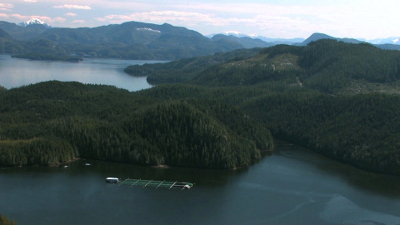
There is no doubt in my mind that the public, now aware of the truth, are demanding that these fish farms be moved out of our oceans – for something else is happening. More evidence is emerging suggesting a possible link between salmon farms and the disastrous collapse of our Fraser River sockeye – many of whom are passing by up to 60 salmon farms right now, as young smolts migrate out to sea up the Georgia and Johnston Straights and through the Broughton.
Just before I conclude I wish to again make it clear that the lady who came to BC from California to study whales, and stayed to try to save our salmon, Alexandra Morton, is a true hero. It was her courage and determination that brought this issue to where it is today with an aroused population demanding action. I’m proud to have had radio shows in the past which had the privilege to hear the truth straight from Alex.
I conclude with this: this crisis, the loss of hundreds of thousands of wild salmon so corporations could take huge profits out of our oceans at the expense of our wild salmon and distribute them to their shareholders – nearly all whom don’t live in BC – did not happen by accident. The premier and his government knew from the moment they took office in 2001 that farmed salmon were escaping and taking over the spawning grounds of wild salmon and establishing themselves; they knew from 2002 on that wild salmon smolts were being slaughtered by lice from Atlantic salmon fish farms because I can tell you that every word I said on air or wrote came to the attention of the Premier; every study by Alexandra Morton, and peer reviewed an published was known to this premier; he knew of every scientific report which confirmed Alex’s findings because I told him.
I seek and take no credit for this – I was merely the mouthpiece. What I do say is that the premier of this province, refusing to accept overwhelming evidence of distinguished scientists all over the world, with knowledge of the consequences, put the interests of the fish farmers ahead of our wild Pacific salmon – which is the soul of our Province and the way we are identified around the world.
If he had a soupçon of decency he would legislate the fish farms out of existence, then RESIGN.
Letter to the editor by Twyla Roscovich of CallingfromtheCoast.com published in the Campbell River Courier-Islander on April 2, 2010. “The fact that people still try to dispute the science on the issue of lice and disease from salmon farms decimating wild salmon astounds me.” Read article
“Biologist Alexandra Morton aims to raise opposition to open-net pens.” Article by Judith Lavoie in the March 19, 2010 Vancouver Sun. Read article
Article by Mark Hume in the March 29, 2010 Globe and Mail about a hard-hitting report issued by the Salmon & Trout Association of the United Kingdom. Read article
Former DFO senior manager and biologist Otto Langer discusses the politics of Fraser gravel mining. Highlights from 2009 event in Chilliwack, hosted by the Fraser River Gravel Stewardship Committee.