
Tag Archives: Salmon

Cummins Raises Potential Conflicts of Interest in Cohen Sockeye Commission

Share

John Cummins. MP, Delta-Richmond East (Conservative), a former commercial fisherman, has called into question the appointment of four men to the Cohen Inquiry into the collapse of the Fraser River sockeye with the mandate to inquire into, amongst other things, the actions or non-actions of the Department of Fisheries and Oceans.

These men are Carl Walters, a fisheries professor at UBC, Brian Riddell, a former long-time DFO senior manager, Thomas Quinn, a fisheries advisor to DFO over the years, and Paul LeBlond, a long-time advisor to the federal fisheries minister of the day. All men are acknowledged as experts in the field and it is this which I will show, as Cummins has shown, that is the root of the problem.

There are two things to bear in mind here – first, Cummins is not calling the credentials of any of these men into question, and nor do I; second, the Commission directs Justice Cohen to develop recommendations “for any changes to policies, practices and procedures of the Department [DFO] in relation to the management of the Fraser River sockeye salmon fishery and included in this mandate is a complete review of aquaculture and its impact on pacific salmon. The review is to include government involvement.”

I am shocked into disbelief that Cohen would appoint these men as advisors because they are in fact witnesses, and important ones. Here’s what Cummins has to say:

Cohen ought instinctively to know that a full-fledged judicial inquiry into the department’s management of the salmon fishery should not, indeed must not employ people who had in any way advised the Department or those who had relied on departmental funding for their work. This is akin to asking them to investigate themselves and rule as to whether their advice was appropriate and whether it was properly implemented or disregarded by the Department.

The notion of a conflict of interest always seems to confound most those who ought best be able to spot one. One cannot begin to look at any aspect of the Pacific Coast Salmon fishery without immediately looking at the DFO over the years. This requires the closest look not only at the decisions they made but the advice they had, and from whom, when making them.

It is no more complicated than this: an investigation of DFO and its decisions requires that the actions of all who participated in the decision making process be carefully investigated. To have those who participated be advisors not witnesses is intolerable and I’m surprised these men haven’t declined on that account for one cannot be an advisor if one is a witness and each of these men are prime witnesses.

Is it fair to conclude that these advisors are being paid a healthy per diem which they wouldn’t get if they were advisors? I’m not suggesting that these fine scientists would put personal welfare ahead of duty but it doesn’t matter what I think. What matters is what would ordinary people think because as I will demonstrate in a moment, it’s appearances that matter so much in proceedings like these.

There is absolutely no way this can be avoided being said: Mr. Justice Cohen has, from the outset, disqualified his commission’s ability to carry out its mandate and must resign or re-constitute his advisors.

Many British Columbians were delighted to learn of this commission. Now, we were told, we would get out all of the evidence. We assumed that this was a “non political” exercise and dedicated to getting to the bottom of decisions made by DFO over the years.

Now, what do they find?

That the very witnesses who should be examined and cross examined Judge Cohen has sheltered from this by being made advisors!

It’s a matter of the commission seeming to be fair. The underlying principle by which our courts or tribunals operate can be stated, as it was long ago, thusly “Justice must not only be done, but should manifestly and undoubtedly be seen to be done”. Be seen to be done…It must not only be fair it must be seen as fair. These advisors are precisely the people I would want to see examined and cross-examined were I the commissioner. What’s happened to Mr. Justice Cohen’s sense of fair play puzzles me greatly as it must all interested British Columbians.

I do not say that “the fix” is in, but given the way the commissioner has arranged to have witnesses made into advisors one might be tempted to ponder that notion.

For while the Commissioner, Bruce Cohen, may not be political, his boss, Stephen Harper – a man whose only demonstrated interest in the environment has been to let corporate friends destroy it – sure as hell is.

Commissioner Cohen must terminate these advisors and hand them subpoenas or forfeit his and the commission’s right to have the confidence of the public.

Read Conservative MP John Cummins’ press releases on the subject at www.johncummins.ca
Share

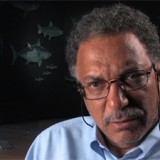
Dr. Daniel Pauly on the Fraser Sockeye Collapse

Share

Dr. Daniel Pauly of UBC’s Fisheries Centre is revered as one of the world’s top marine scientists. At the end of last year’s disastrous season for Fraser River sockeye returns – which saw the collapse of these vital stocks from over 10 million predicted returns to just over a million – Dr. Pauly addressed a number of questions and theories surrounding the grave situation. Government officials and spokespeople for the salmon farming industry were quick to dismiss concerns about impacts from open net salmon farms on wild salmon migratory routes by shifting the blame to factors over which we have less control, like global warming. Here Dr. Pauly pokes holes in the climate change argument and urges a precautionary approach vis-à-vis all potential factors, especially those which we can easily control, like salmon farms, habitat destruction from logging, and over fishing. Dr. Pauly’s words are important food for thought as the Cohen Commission Judicial Inquiry into the sockeye collapse gets underway. Four minutes.

Share

Shatner casts his voice into river of debate over Pacific salmon farming

Share

Article by Gloria Galloway in the Globe and Mail. “The fauna and the flora of the British Columbia river shores and rivers are nurtured by the salmon. Without the salmon, they die. And when they die, [there is] a huge rent in the tapestry of nature in that area. It is a basic species that must be saved.” Read article

Article on the same subject by John Kurucz in the Royal City Record: Shatner supports fish bill

Share

Morton’s Telling Memo: Years of Government and Industry Secrecy on Salmon Farm Problems

Share

The memorandum from Alexandra Morton which I circulated last Wednesday demands a deeper look into what the Campbell government knew when, in September 2002, they lifted the moratorium on fish farms. (For convenience I have pasted the Morton article below).

These documents arose in 1995 when the NDP were in power when they placed a moratorium on new fish farms.
This moratorium was lifted by the Campbell government and here is what then minister John Van Dongen had to say:

“… B.C. now has the most comprehensive regulatory framework in the world, including science-based standards to protect the environment.” (Emphasis added)

“… We’ve worked very hard on these regulations to ensure that they do a proper job of protecting the environment in British Columbia… we are confident the regulations will do that and we are confident we have a regulation in place that is leading edge in the world.(Emphasis added.)

We must take Mr. Van Dongen at his word that “careful consideration” was given this decision and examine what even casual consideration would have disclosed.

Leaving aside questions of waste, drugged fish, coloured fish, the escape of farmed fish into the wild, and disease, what was the evidence the minister possessed on the question of sea lice?

There were, of course, the documents raised by Alexandra Morton in her memo. One would have thought that they alone would have convinced a careful minister that rather than permitting more fish farms, he should get rid of the ones that existed and at the very least force them to go to closed containment.

But, not only did Van Dongen have these remarkable memos to alert him of the sea lice issue, the facts available at that time show that the issue of sea lice from farmed fish cages destroying migrating smolts was a huge one in Norway, Scotland, Ireland and even New Brunswick. (It is important to remember that juvenile pink and chum salmon weighing less than half a gram are more than 10 times smaller than Atlantic salmon smolts, and thus much more susceptible to louse parasitism.)

What did the Campbell government know about the other jurisdictions concerning sea lice?

It can be said without fear of contradiction that even the most superficial look at the industry in Norway, Scotland and Ireland would have disclosed that the impact of sea lice from farmed fish on migrating salmonid smolts was a huge problem.

Norway had long recognized and attempted to minimize the sea lice threat enacting the Norwegian Action Plan Against Salmon Lice in 1997. Ireland and Scotland adopted similar sea lice reporting and control measures.

Ah, you say, but this is Norway, Scotland and Ireland, not BC!

Fair enough – let’s look at BC, though I don’t think that this would be Premier Campbell’s first choice!

In 2001, Alexandra Morton, then associated with The Raincoast Conservation Foundation (not to be confused with the Raincoast Research Society with whom Ms, Morton is now associated), identified the first epidemic of this lice species on juvenile wild Pacific salmon. Over 850 juvenile pink salmon, as well as chum, coho, and chinook salmon and adult local sea run cutthroat trout were examined in the summer of 2001. 77% of these fish were infected at or above the lethal level as defined by Norwegian scientists to be 1.6 lice/gram of fish. The epidemic’s epicentre was in the midst of active salmon farms, with very few to no lice where there were no farms. Far from showing the alarm one might have expected, the DFO wanted to charge Ms. Morton with “illegal testing”!

The fact is, that by September 2002, when the Campbell government lifted the moratorium on fish farms, Alexander Morton had clear evidence that sea lice were slaughtering wild salmon smolts as they migrated out to sea and the Department of Fisheries and Oceans (Federal) and the provincial Ministry of Agriculture, Food, and Fisheries knew of Ms. Morton’s findings and the Minister and the Campbell Cabinet ignored this clear evidence of the horrendous impact of sea lice on wild salmon and lifted the moratorium anyway!

It’s this that takes the Campbell government’s decision out of the possibility of error and firmly into the realm of deceit.

What has happened since the Van Dongen announcement should give us all further cause for extreme concern.

When Alexandra Morton made public her findings re: sea lice and migrating smolts in the Broughton Archipelago in 2002 she was mocked, derided, and threatened with arrest. Scientific study after scientific study, all peer reviewed, supported her findings yet time after time the Campbell government ignored these findings and declared that science was on their side.

Clearly, not only did the Campbell government know the truth about the impact of sea lice from fish farms on migrating salmon smolts from the outset and chose to ignore it, they have compounded their deception by ignoring scientific study after scientific study ever since.

I suppose it would be ridiculous to think that Premier Campbell would at least now have the decency and honour to admit the truth and do everything he can to redeem his government’s disgraceful behaviour and make every possible effort to restore the fisheries it’s done so much to destroy.


Morton memo

A series of government memos reveal a heated debate in 1995 over a sea louse outbreak on a farm salmon on the Fraser sockeye migration route (Okisollo Channel). In 1995, a salmon farm requested permission to use hydrogen peroxide to treat an extremely heavy outbreak of sea lice on their fish. When the Ministry of Environment, Parks and Lands (MELP) informed the company that their drug application would have to be released to the public, the fish farmer withdrew the request. When environmental groups found out about the sea lice outbreak, the BC Salmon Farmers Association called for an investigation of MELP and a guarantee that fish farmers had a right to secrecy in the future.

September 6, 1995 Don Peterson of MELP writes, “The company has withdrawn their application (for hydrogen peroxide) because they heard there was a requirement to advertise if a pesticide was going to be applied. I guess they were either afraid of the shareholders…or the public finding out… the company has asked that this request be kept strictly confidential and that all correspondence on the subject be destroyed.”

September 28, 1995 the BC Salmon Farmers Association criticized Minister Moe Sihota (MELP): “…government has an obligation to maintain confidentiality… Government is further prevented from unauthorized collection, use or disclosure of information…. puts at risk … capital investment of private citizens and individual companies…”

However, salmon farms operate in Canada’s public waters and impact a Canadian resource – wild fish.

On October 23 Earl Warnock of MELP writes, “I find it unconscionable that they (fish farmers) are only prepared to undertake measures appropriate to protect their stock health and the environment unless they can do it in a clandestine manner…. and for them and MAFF to ask us to operate with them in this way says something about the people we are dealing with.”

“MAFF” = Ministry of Agriculture, Fisheries and Food, now Ministry of Agriculture and Lands (MAL).

Either the sea lice remained on the farm fish on the Fraser sockeye migration route or they were treated without permission from MELP.

November 03, 1995, Bryan Ludwig, MELP writes: “…we are in the difficult position of being concerned about use of pesticides for treatment of sea lice, but also wanting to ensure we avoid a severe outbreak for fear of transfer to wild stocks.”

These documents reveal heroes among our MELP bureaucrats who tried to protect our wild salmon from salmon farms. Gordon Campbell disbanded MELP as soon as he took office in 2001, and he renamed MAFF, MAL and gave them control of allocation of Crown Land. The fish farm industry did not develop a sea lice action plan, the public lost their government biologist advocates, sea lice outbreaks continue with lethal infection underway today rates on wild juvenile salmon on the Fraser migration route (Okisollo Channel) (photos available) and Fraser sockeye stocks migrating through Okisollo Channel are in steep decline.

October 23, 1995 Earl Warnock MELP: “If the truth harms their integrity perhaps they need to look at themselves…”

If we cannot save wild salmon in British Columbia, we do not live in a democracy.

All documents available at www.salmonaresacred.org, “Breaking News”

Share

Damien talks Salmon Migration and Common Sense Canadian on CJSF Radio

Share


Damien Gillis discusses the historic Get Out Migration, the end game of getting salmon farms off BC’s coast, and other matters re: the Common Sense Canadian – with host Sylvia Richardson on SFU radio last week. 15 min.

Share

Letter to Steve Thomson, Minister of Agriculture and Lands

Share

Dear Minister Steve Thomson, Ministry of Agriculture and Lands (MAL):

I am writing to request attendance at farm salmon harvests to assess unlawful consumption/destruction of wild fish such as commercial fishermen are required.

On May 19, I met with your assistants Harvey Sasaki and R. J. Senko and MAL scientists Drs. Roth and Sheppard. Our conversation raised several concerns.

Continue reading Letter to Steve Thomson, Minister of Agriculture and Lands

Share

Triumphant Victoria Finale for Salmon Migration! (and more)

Share

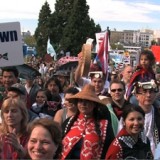
Watch the climactic finish of the “Get Out Migration” for wild salmon – May 8 in Victoria, where 5,000 turned out to the the lawn of the provincial Legislature to tell governments to get open net salmon farms out of BC’s waters. 8 min short documentary featuring powerful speeches from salmon biologist Alexandra Morton – who led the Migration down Vancouver Island – former BC Environment Minister Rafe Mair, Grand Chief Stewart Phillip, Order of Canada recipient Vicky Husband, plus aboriginal drums, music, colourful costumes and thousands of citizens committed to saving wild salmon…Everything the mainstream media didn’t show you about one of the largest and most powerful public demonstrations of its kind in BC history.

More videos about the Wild Salmon Migration:

The Common
Sense Canadian’s video coverage of the historic walk for wild salmon down Vancouver
Island, culminating in Victoria on May 8. Wild salmon advocates take to the streets
and take on big Norwegian corporations to take back their wild salmon.”

A diverse group of wild salmon advocates, part of the “Get Out Migration,” led by
biologist Alexandra Morton, sent a message to the world’s largest salmon farming
corporation in Campbell River – headquarters of the Norwegian company’s Canadian
operations. Marine Harvest owns close to half of all salmon farms on BC’s coast,
linked to the devastation of vital wild salmon runs. The concerned citizens and
First Nations returned a pile of farmed Atlantic salmon to the company, just a few
of the over 40,000 that recently escaped from Marine Harvest’s farm in Port
Elizabeth. Escaped Atlantic salmon, an invasive species on BC’s coast, are just one
of a long list of severe ecological impacts from Norwegian open net salmon farms.

Wild salmon advocates on the historic Get Out Migration called for the resignation
of Geir Isaksen – CEO of Norwegian Government-owned Cermaq, the world’s second
largest salmon farming corporation – at the company’s headquarters in Campbell
River, over his failure to protect BC’s wild salmon from the ecological impacts of
his company’s farms. Salmon conservation groups have been pushing for the clearing
of the the “Wild Salmon Narrows”, a critical migratory pathway for embattled Fraser River
sockeye and other wild salmon. Isaksen recently rejected calls to close just two
Cermaq-owned farms despite having called for such precautionary measures himself in
his 2009 report to shareholders.

Common Sense Canadian video on the launch of the historic Walk
for Wild Salmon down Vancouver
Island:

On the eve of the kick-off of the “Get Out Migration”, Rafe Mair wishes
Alex Morton Godspeed and urges all British Colombians to join her on
her historic trek down Vancouver Island. The march was intended to rally the public and send a message to governments
that it’s time to remove open net salmon farms from BC’s coast and help
save our embattled wild salmon.

Share