Category Archives: Energy and Resources

Rafe on Supporting the Common Sense Canadian – Plus Our New Op-ed Blog

Share

The Common Sense Canadian has been going well over the past year-plus and this seems to be a good moment to reflect on what we’ve done, not done, and will do.
 
First please understand that we are just two people. Our funding is very limited and, to speak boldly, we need considerably more. We’re deeply grateful to those who have donated and special thanks to those who have signed on for a regular donation. We’ll be launching a special promotion next week for November and December, encouraging more of you to become monthly sustaining contributors – even $5 a month helps, as it’s funding we can count on into the future.
 
Second, one way you can immediately be of help is to attend my 80th birthday Roast on November 24th next – tickets cost $35 in advance ($25 for students) and all proceeds go to the Common Sense Canadian. (Incidentally, the name derives partly from Thomas Paine’s pamphlet Common Sense which sparked the American Revolution. Paine is a great hero to Damien and me.)
 
The most critical issue we now face comes from the success of this offering. Our “hits” and regular emails from readers tell us that we’re making contact with a large number of British Columbians and that has become a unique “problem” – more and more people want us to get involved with the war they’re having with the establishment over an environmental issue in which they are heavily involved. And, in a moment I’ll tell you what we’re going to do to assist these wonderful folks in BC and Canada.
 
For historical reasons Damien and I find ourselves with three issues that dominate our time – Fisheries, private power projects (IPPs) and power projects generally, and pipelines/tankers. This by no means dulls our concern about other issues such as the Gateway Project and its many facets, mining issues such as Raven coal project on Vancouver Island and the so-called Prosperity Mine and other issues that  so many of our courageous citizens are involved in.
 
We have set up a page called “Your Voice”, where we welcome op-ed blogs on issues we don’t regularly cover (you can read our first entry there now – a piece from David Williams, President of Friends of the Nemaiah Valley, on the cultural impacts of the proposed Prosperity Mine). This column will be accessible from our home page and also included in our weekly mail-outs to readers. I want to emphasize this – we take all these issues seriously and just because a blog is published doesn’t mean that we won’t help in other ways as well when the opportunity arises.
 
We reserve the right to edit for errors and length as well as issues of good taste and defamation – and we can’t guarantee that we’ll publish every piece. But if you have an issue you’re dealing with and would like to inform more people about it, please contact us with your proposed op-ed.
 
Damien and I welcome this opportunity to expand the horizons of the Common Sense Canadian.
 
We must be our own media in this province of anaemic mainstream media who peddle, uncritically, the establishment line.
 
Please join us!
 
Rafe and Damien


Share

Obama Sends Keystone XL Pipeline Back to the Drawing Board for New Route

Share

Read this story form the Globe and Mail on the Obama Administration’s surprising decision to send Trans-Canada’s proposed Keystone XL pipeline back to the drawing board for a new route. The move is expected to set the project back at least a year and a half and is being hailed as a victory by the project’s opponents.

“The U.S. State Department’s move to withhold a permit on
TransCanada’s Keystone XL pipeline until after the 2012 election is
officially meant to give the Obama administration more time to find an
alternative route for the conduit through Nebraska. But the
additional review announced Thursday has all the markings of a delaying
tactic aimed at sparing the President the dicey task of making a
politically tough call that could alienate a critical constituency
and/or hand ammunition to his opponents.” (Nov. 10, 2011)

Read full article

Share
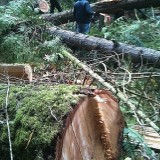
Ancient Douglas Fir grove on the chopping block today

Logging of old growth Douglas Fir surprises conservationists today

Share

The following is a press release from the Wilderness Committee:

Wilderness Committee, Mid-Island

Media Advisory
Wednesday, November 9,  2011 – for immediate release –

Nanoose Bay, BC — Residents of Mid Island communities rushed into Nanoose Bay’s DL33 Forest this morning to the sound of chainsaws after the Wilderness Committee Mid Island Chapter, learned that logging roads have been pushed in through private property to access the highly threatened and endangered Nanoose Bay Forest , a public owned rare Coastal Douglas-fir forest that has been identified by government scientists as containing forest and wetland ecosytems that will become extinct.

“The Wilderness Committee Mid Island Chapter has been actively working with the local communities and with the support of local and regional governments to  find solutions to logging this remnant east coast forest for the past year and we will not give up fighting this criminal Clark Government  blunder,” said Annette Tanner, Wilderness Committee, Mid Island spokesperson.

Share

New Report from Canadian Centre for Policy Alternatives: Fracking Up Our Water, Hydro Power and Climate

Share

Read this vital new report from Ben Parfitt and the Canadian Centre for Policy Alternatives on the impacts of fracking technology and resource development in BC.

“A new study concludes that BC’s ballooning shale gas industry is the
natural gas equivalent of Alberta’s tar sands, placing the province’s
water and hydro resource at risk as well as jeopardizing climate change
policies.

Despite industry and government assertions that natural gas from
shale rock is a ‘green’ alternative to other fossil fuels, the study
released today by the Canadian Centre for Policy Alternatives and
Wilderness Committee finds the opposite, and lays much of the blame on
the controversial gas extraction technology known as hydraulic
fracturing, or ‘fracking.'” (Nov. 9, 2011)

Read report: http://www.policyalternatives.ca/fracking

Share
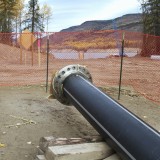
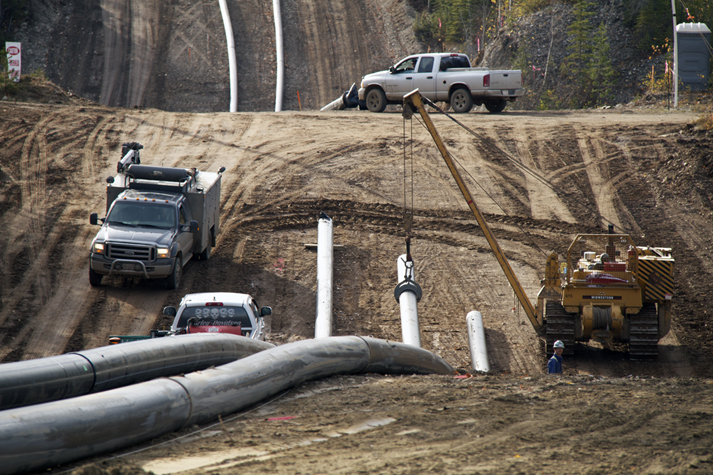
Talisman's water pipe from the Williston Reservoir - under construction this past October

Energy Minister Lied About Consulting Public on Frack Water Pipeline

Share

Did BC Energy Minister Rich Coleman outright lie in the Legislature when he promised public consultation for a massive new pipeline to draw billions of litres of water from BC’s biggest hydroelectric dam, the Williston Reservoir, to supply the natural gas industry? A new documentary from Global TV leaves little doubt he did just that.

This past weekend, Global TV’s national investigative journal, 16×9, aired a 16 min story titled “Untested Science”, on the exploding natural gas hydraulic fracturing (or “fracking”) industry in Northeast BC and Alberta. I assisted with the film, contributing a significant amount of footage from a forthcoming feature documentary project I’m working on with another Vancouver filmmaker, Fiona Rayher.

For me, the most poignant aspect of the must-see story was its coverage of the enormous use and contamination of fresh water for these fracking operations, which blast a mixture of high-pressure water, sand and toxic chemicals deep underground to crack open shale formations, thus releasing gases trapped within. The practice has become highly controversial everywhere it’s practiced around the world – generating a ban in France and moratoria in places like Quebec and parts of the Northeast United States. Meanwhile, BC, a global hotbed for the industry, has largely escaped public and regulatory scrutiny – but that’s starting to change, as this 16×9 documentary demonstrates.

The story clearly shows Minister Coleman, responding in the Legislature this past June to a question from Independent MLA Bob Simpson – who, along with fellow Independent MLA Vicki Huntington, has worked hard to put fracking under the microscope in Victoria – regarding the then-proposed water pipeline by fracking giant Talisman Energy and Canbriam Energy into the Williston Reservoir.

Mr. Simpson asked whether the proposal by Talisman Energy and Cambrian Energy to remove 7.3 Billion litres of water a year from behind the dam has in fact already been approved, without public consultation. Here’s how Coleman replied:

“There will be an extensive process of public consultation, discussion and negotiations with First Nations before anything would go ahead.”

Two months later, the companies got their approval – in the form of 20 year water extraction licenses from the BC Government – absent any public consultation. The highlight of Global’s program is the bumbling response of Coleman to their questions about why he lied in the Legislature when he promised “an extensive process of public consultation.” Here’s part of Coleman’s feeble answer: “…And that could have been a mistake in language by me…I mean, basically what I was trying to say is that we would do government process with regards to water licenses.”

By the time I was up in the Peace Valley in early October, the construction was already well underway, proceeding at a furious pace. I counted 3 different coupling machines at work, fusing together 50-60 foot lengths of black polyethylene pipe, approximately 10-12 inches in width – for two side-by-side pipelines.

A worker there described the process to me. The machine heats up one end of each pipe, then presses them together until they bond. Each machine can fuse a new length of pipe every half hour or so. With at least three machines running, the construction of the 37 mile pipeline from the edge of the reservoir to the companies’ nearby fracking leases was progressing rapidly.

I drove out to the end of the line, where the twin pipes will eventually plunge into the reservoir and begin hoovering out 10 million litres of water every day – mind you, before it gets turned into electricity for British Columbians by passing through the dam’s turbines (it’s of course also permanently removed from the Peace River’s downstream ecologies). While filming the work underway there, a silver truck from Talisman barreled up to me. The driver rolled down his window and began barking questions at me; as soon as he ascertained I didn’t work for the company he told me to “Take my pictures and fuck off.” He claimed it was private property, to which I replied that we’d have to agree to disagree on that point – in perfectly well-mannered, expletive-free speech (okay, maybe not quite). I finished my filming at a deliberately leisurely pace, packed up and left.

What I didn’t get into with this fellow from Talisman was the fact that my family’s ranch, Goldbar at 20 Mile, sits beneath that there reservoir. It was flooded years ago to provide the people of BC with affordable electricity – not for the fracking industry to get its water. And therein lies the problem with this whole scenario – or one of them, anyway.

British Columbians are being told by Coleman and his government that we need to flood yet another section of the Peace River Valley for Site C Dam; and yet all of the power from that dam is destined not for BC households and small businesses, but to power the fracking industry and up to six new mines in the region (BC’s electrical demands are on a steep decline, to the point we’re currently abundantly self-sufficient in electricity).

Meanwhile, we’re sucking unmade electricity – in the form of water – from an existing hydroelectric reservoir, to provide another vital resource for fracking. And all this electricity and water go to industry at a fraction of what it’s worth. We’re currently selling power to big industry for about half what you and I pay on our residential bills – and that gap is only set to widen.

So here is the question facing British Columbians, when it comes to the fracking industry and the matter of Site C Dam:

Do you support subsidizing the oil and gas and coal industries with endless amounts of fresh water – including taking it from our public hydroelectric dam – plus building a $10 Billion new dam, to be paid for by your tax dollars and much increased power bills, all so these industries can get their power for half to a third what you pay for it?

That’s the deal Energy Minster Rich Coleman and Premier Christy Clark would have you do. Just don’t expect them to ask you this question. They’ve made their position on public consultation abundantly clear.

Share

Oil, Cancer & Bicycles: The Unholy Alliance of The BC Cancer Foundation and Enbridge

Share

The high-profile sponsorship of a BC cancer research charity event by the world’s biggest oil pipeline builder raises serious questions about the ethics of fundraising – and threatens to backfire for both organizations involved.

Unless you never open a newspaper, turn on the TV, listen to the radio, or surf the web, you have likely recently come across glossy ads for the “Enbridge Ride to Conquer Cancer”. The 2012 “Ride” will be the fourth for the annual event, with similar rides taking place in Alberta, Ontario and Quebec as well. This year’s and last year’s major sponsor is none other than controversial oil pipeline giant, Enbridge – who want to build the highly unpopular Northern Gateway Pipeline from the Alberta Tar Sands to a supertanker port at Kitimat on BC’s north coast.

Here’s how the event’s organizers describe it on their website:

“The Enbridge Ride to Conquer Cancer® is a unique, two-day cycling event to take place on June 16-17, 2012. During this bold cycling journey, you will ride for two days through the scenic Pacific Northwest! Our vision is clear – A World Free From Cancer.”

Having long had the impression that oil – during its life cycle, from extraction through refining, transport, inevitable spillage and ultimate burning – can cause cancer, I naturally felt it hypocritical that a cancer-fighting organization would accept money and sponsorship from a Big Oil company.

So I called the Canadian Cancer Society’s BC Chapter to grill them. Upon doing so, though, I discovered that the Society – that high-profile organization most often associated with cancer-related philanthropy in this province – has nothing to do with the event. Moreover, the woman I spoke to there acknowledged it was hardly the first time they’d dealt with this confusion.

You see, the proceeds from the Enbridge Ride to Conquer Cancer flow to the BC Cancer Foundation, not the Society. A little more research taught me that the BC Cancer Foundation is the fundraising arm of the BC Cancer Agency, which is a BC government department – under the Provincial Health Services Authority.

So the proceeds of the Enbridge Ride to Conquer Cancer go, ultimately, to the BC government!

You might ask why I wasn’t more careful in reading the shiny ads for the Ride, which clearly display (though in tiny print) the BC Cancer Foundation, right there in black and white…Well, actually, not black and white, but yellow and blue.

In fact, the banners, posters and commercials for the Enbridge Ride are all in yellow and blue. An interesting choice, given that neither the corporate colours of Enbridge (gold and red) nor the Cancer Foundation (purple and green) are yellow and blue. No, yellow and blue would be the colours of the Cancer Society.
 
A huge coincidence, I’m sure. Nothing to do with giving citizens who see these ads the false impression that this event benefits the much better-known and highly regarded Cancer Society. (Yeah, right!)

The reason I know it’s all just a big coincidence is that Enbridge isn’t a multi-billion dollar oil company pushing a highly controversial pipeline through BC and wouldn’t be a company looking to do some PR damage control, and certainly wouldn’t have access to sophisticated marketing people who understand the subconscious power of branding, who, in turn, would never consider using the brand of one of BC’s most beloved non-profits, without its permission, to greenwash their company’s activities…No more then a filmmaker and writer, such as myself, would use sarcasm to make a point!

Having ascertained that this event actually represents an alliance between Enbridge and a BC Government agency – through its fundraising foundation – I contacted the BC Cancer Foundation with a few questions. Here is a sampling of my correspondence with their PR rep, Allison Colina:

Damien Gillis: Is it hypocritical for your organization to accept sponsorship from a company who deals in a known cancer-causing product? (as worded in my initial phone conversation with Ms. Colina’s colleague)

Allison Colina: With regards to petroleum products causing cancer, we turn to the research and clinical experts at the BC Cancer Agency to determine what are cancer-causing substances…According to the World Health Organization, there is no conclusive research at this time that indicates that petroleum products cause cancer.

DG: …[Does] your organization [feel] it is problematic to be associated with such an unpopular company and project in BC (polls show upwards of 80% of British Columbians are opposed to oil tankers on the BC coast and Enbridge’s proposed project has been highly controversial, as you well know)?

AC: Our Gift Acceptance Policy is approved by our Board of Directors and guides management and employees in accepting gifts from a wide variety of donors and sources, and ensures that the Foundation maintains a strong base of financial support. Examples of prohibited gifts include gifts from tobacco companies, or gifts from the proceeds of crime. Since Enbridge came on-board as sponsor of the Ride to Conquer Cancer in 2010, our participation numbers have grown and we have been able to focus on our goal of a world free from cancer by directing significant funds to leading-edge research at the BC Cancer Agency thanks to the Ride.

Ms. Colina declined to divulge the dollar value of Enbridge’s sponsorship upon my inquiry. I also asked her about the Precautionary Principle – providing the example of electromagnetic radiation (EMF), which up until recently was not considered a possible carcinogen by the WHO but is today. She declined to deal with that question directly.

Upon reading Ms. Colina’s emailed answers to my questions, I decided to do a little research into the carcinogenicity of petroleum products. Was I simply mistaken in my understanding of the health implications of oil and its derivatives?

I turned to the WHO’s list of known, probable and possible carcinogens to see if there was any truth to Ms. Colina’s assertion that “according to the World Health Organization, there is no conclusive research at this time that indicates that petroleum products cause cancer.”

Well, it turns out the International Agency for Research on Cancer – the WHO subsidiary group that produces the list of carcinogens Ms. Colina referred to – does indeed list “Petroleum refining (workplace exposures in)” as a probable carcinogen and Benzene, a byproduct of petroleum, as a known carcinogen. 

I then contacted Dr. Karen Bartlett of the UBC School of Environmental Health, posing to her the same question: To what extent can petroleum products be considered carcinogenic? Here’s what she told me by phone:

“There are two major petroleum products that we know are associated with carcinogenicity. One is in the distillation process of petroleum products, which produces Benzene. Benezene is carcinogenic. The other is in the combustion of diesel. Diesel particulate is carcinogenic.”

Let’s also consider the Campbell/Clark Government’s own admissions regarding the health impacts of burning fossil fuels – diesel truck fuel, to be specific.

The following statement didn’t specify any particular diseases or health impacts – it was speaking in a general sense of overall health outcomes. In the government’s submission to the environmental assessment process for its then-proposed (now under construction) South Fraser Perimeter Road truck highway from Deltaport, the Ministry of Transportation acknowledged vehicle emissions from the highway – which passes within 500 meters of 16 schools and near many homes and workplaces – would result in increased human illness along the route.

They of course found a silver lining to all this, writing : “With increased air pollution there can possibly be increased employment (e.g., in the health sector) because of the economic activity associated with correcting the results of its impacts.” (Technical Volume 16, page 39)

So perhaps cancer and asthma are in fact good for the economy, which makes the BC Liberals’ support for the Enbridge pipeline – and acceptance of their own government agency taking money from the same company – more understandable.

That too was sarcasm – in case you missed it.

In closing, I don’t mean to suggest that cancer research isn’t of vital importance – or to impugn the efforts of the event’s organizers and participants. Surely the funds raised will go to a good cause. And surely those cyclists working hard to raise pledges for the event are doing an admirable thing which they believe in.

What I question is whether it is ethical for an organization battling cancer to accept a large donation from a company whose products cause cancer, which they do. Far from acknowledging what the WHO and many other scientists and doctors from around the world suggest, the BC Cancer Foundation prefers to misrepresent the WHO’s position and to utterly disregard the Precautionary Principle, which would suggest you don’t wait for 100% confirmation when peoples’ lives are at stake.

Moreover, is it appropriate for this organization to offer Enbridge the opportunity to greenwash its severely embattled image in BC by dishonestly associating itself – through savvy marketing and manipulation of the public – with the reputation of the Cancer Society, which in fact has nothing to do with this event?

Make no mistake, that is precisely what Enbridge is up to with its sponsorship of this event – and the BC Cancer Foundation and BC Government’s Cancer Agency well know it, or most certainly should. And if this sponsorship in anyway helps to mollify public opposition to the ghastly Enbridge Northern Gateway Pipeline, then lives may be lost as a result – if it helps to get the pipeline built. That’s why this matters. And why it’s not okay to say this money goes to positive ends and leave it at that.

This money may in fact go to very negative ends, if one examines the bigger picture and considers the implications of being complicit in greenwashing the expansion of the Alberta Tar Sands, the eventual certainty of ecologically disastrous oil spills via the pipeline and tanker traffic on our coast, and the increase of carbon emissions, air pollution and climate change – all of which cost lives.

The question now is how will the public, knowing the true nature of this scheme, choose to respond to the Enbridge Ride to Conquer Cancer? If more people understood what Enbridge was up to – if the BC Cancer Foundation and BC Government were to hear loudly from the public on this matter – that would effectively nullify what Enbridge is trying to do with this event. It might even backfire and cause the company even more problems as it enters the critical public comment phase of the National Energy Board review of its pipeline proposal, this coming January.

Campaigns and movements thrive on specific challenges to direct their energies toward – this could very easily become one of them.


Share

Oil Pipelines and Tankers: A Bad Proposition for BC’s Economy and Environment

Share

There are two stories about pipelines this week – the first was a Vancouver Sun article October 25. Here it is, in part:

Sixteen business and labour leaders have signed an open letter to British Columbians urging their support for natural gas and oil pipeline proposals across the northern half of the province which they say are needed to link Canada’s energy resources and B.C.’s economic future more closely to Asian economies.

The letter marks the first public relations campaign aimed at swaying opinion province wide towards energy projects in the North. Up until now, only regional support groups have been formed, such as the Enbridge Northern Gateway Alliance, which is actively supporting Enbridge’s $5.5-billion Alberta-to-Kitimat pipeline project in communities along the pipeline route.

The letter was written by former federal transportation minister Chuck Strahl. Signatories include former international trade minister David Emerson, the B.C. and Yukon Territory Building and Construction Trades Council, the Business Council of B.C., the Vancouver Board of Trade and the Canadian Manufacturers and Exporters, the country’s largest industrial association.

As for the second story, on October 24 I attended the Jack Webster Awards dinner where Kevin Redvers of CTV did a story called Black Blood – Tainted Land. What a sight with dying caribou showing the results of an oil spill two years ago and how the black ooze is still there with the consequent loss of a staple part of the diet of First Nations.

Clearly the business and labour people don’t care a fiddler’s fart about the environment and any concerns they might have are a carefully disguised secret.
 
The people of BC have a choice to make – at least they would if we had democracy in this province. It is a clear either/or – either we follow the union and business leaders and have the certainty of oil spills or we don’t.

We will have spills – there are no ifs ands or buts about it. The federal Department of Environment, scarcely made up of wild eyed environmentalists, says this about tanker traffic out of Kitimat – there will be a 1000 barrel spill every four years, a 10,000 spill every 9 years! One can only imagine what the odds are for a spill from pipelines!
 
These pipelines traverse over 1,000 kilometres of wilderness which, amongst other things, contains three of the most important fisheries we have. The pipelines are impossible to patrol and any spills will be difficult and time-consuming to deal with and, as Kevin Redvers has demonstrated, the damage is permanent.
 
Moreover, BC makes dick-all out of this – we are simply the right-of-way.
 
This, then, is the bottom line: We will trade our wilderness for infinitesimal rental money with certain environmental catastrophes. Don’t believe for a moment that pipeline companies will “minimize” the risk. Even if that were true, which it isn’t, the consequences are so terrible that this feeble statement is an insult to our intelligence. Moreover, the jobs will be short term and will be mostly from out of province.
 
Please believe it – the spills will come, our rivers and wilderness will be damaged and the damage will be huge and permanent.
 
The Campbell/Clark government must hold a referendum and let British Columbia citizens decide the fate of their favoured and much loved province.
 

Share

Dr. Marvin Shaffer in Vancouver Sun: BC Will Lose Millions on LNG

Share

Read this essential op-ed from SFU’s Marvin Shaffer in the Vancouver Sun, exposing the real cost to British Columbians of a heavily subsidized liquid natural gas boom on BC North Coast.

“A striking feature of the government’s jobs strategy is the number of
very electric-intensive projects it entails. The strategy calls for the
development of new mines and liquefied natural gas (LNG) facilities,
all of which will require very large amounts of electricity.

The
first phase of the proposed LNG plant at Kitimat in itself will
reportedly consume some 1.5 million megawatt hours of electricity per
year, or roughly one-third of the entire output of the proposed Site C
dam project.

Media commentators have questioned whether BC Hydro
will be able to supply these large new requirements for electricity.
Some worry that it will not be able to do so because of the capital
spending and other constraints that were recommended in the government’s
recent review of BC Hydro’s rapidly rising costs and rates.

However,
the real issue here is not whether BC Hydro can supply the electricity
these projects will need. It no doubt could by acquiring or developing
new sources of electricity supply. The issue is whether, or at least
under what circumstances, it should.

One thing is certain. It will
be very bad for BC Hydro and consequently all of its existing customers
if it does supply electricity to the new mines and LNG facilities at
its standard industrial rate. Under that rate, which averages less than
$40 per megawatt hour, the amount BC Hydro would receive would be less
than half the costs it would incur for the new sources of supply it
would have to acquire.” (October 205, 2011)

Share

China Getting into Shale Gas

Share

Read this interesting story from Scientific American  on China’s foray – with US assistance – into shale gas (while we consider building up to 7 extremely costly and energy-intensive LNG plants in BC to ship shale gas to China).

“Shale gas is among the largest onshore energy prospects in China, and
it is treated as such in Beijing and by local officials in central
China and its sprawling Northwest. Unlocking trillions of cubic feet of
gas buried in underground formations means heating more city apartments,
generating more electricity from a resource other than coal, and
feeding industrial plants hungry for energy.

But the government’s quest to develop China’s large shale gas
deposits is in its earliest days. National oil companies and Beijing are
moving cautiously. China is well aware of the environmental pitfalls
that are raising doubts in the United States. There are geological
differences that make the U.S. shale boom difficult to duplicate in
China. Water
for extracting gas is relatively abundant in Sichuan, but farmers in
the nation’s breadbasket need it more. Sichuan farms supply 7 percent of
China’s rice, wheat and other grains.” (Oct. 14, 2011)

http://www.scientificamerican.com/article.cfm?id=china-begins-tap-shale-gas-american-help

Share

Poll Shows British Columbians Heavily Opposed to More Oil Tanker Traffic Through Vancouver

Share

Read this report from the Vancouver Sun on a new poll showing only 31% of British Columbians are in favour of twinning KinderMorgan’s Trans-Mountain Pipeline from the Alberta Tar Sands to tankers in Vancouver’s Burrard Inlet.

“The survey, conducted by the Mustel Group and financed out of the
office budget of Burnaby-Douglas NDP MP Kennedy Stewart, also found that
35 per cent of respondents support keeping the existing single oil
pipeline. Eleven per cent of respondents favoured removing all Trans
Mountain oil pipeline infrastructure and 22 per cent didn’t have an
opinion. ‘What seems to be front and centre in people’s minds is
that we seem to be taking all the risks without getting any of the
benefits,’ said Stewart. The newly elected MP, one of the NDP’s
natural resources critics for Western Canada, said that the twinning of
the pipeline will increase the risk of an oil spill on the south coast ‘because you will have more oil tankers and larger ones too.'” (Oct. 11, 2011)

Share