
Category Archives: Oil&Gas

Three weeks after crash, Goldstream River remains blighted by fuel spill

Share
From the Times-Colonist – May 6, 2011
by Judith Lavoie

Three weeks after a Columbia Fuels tanker truck crashed and spilled
thousands of litres of gasoline and diesel into the Goldstream River,
pools of fuel-polluted water remain at the edge of the famous
salmon-bearing stream.

Experts, who say the smell and sheen on
shoreline pools may linger for months, are mulling over the best way to
return the river to its original state with the least disturbance to the
fish.

“It’s a very delicate place and we are trying to walk that
line,” said Graham Knox, environmental emergencies manager for the B.C.
Environment Ministry.

For now, the people involved in the cleanup
have agreed to continue intensive monitoring and to change absorbent
booms in the river weekly until it is decided whether the cleanup should
be more aggressive.

“If we dig up all the stream bed and cart it
away with big machines and dump trucks, there will be more damage to the
river and it will remove all the micro-organisms. Is that better than
having some product in the river that is continuing to break down?” Knox
asked.

Complicating the cleanup are emerging coho salmon fry
swimming in pools where fuel has soaked into organic material. Coho
remain in the river for a year.

Ian Bruce, Saanich Tribes
fisheries consultant, who worked the river Friday with technicians from
Quantum Murray, the company hired by Columbia Fuels to clean up the
spill, said some areas where hydrocarbons are caught behind booms still
smell strongly enough to cause dizziness.

“And recent surveys have
found gasoline has soaked into sticks and roots, and we want to try and
remove it without dispersing it,” said Bruce, watching as tiny fish
sped to the surface to feed as he tried to remove a fuel-soaked root
ball.

“The textbook on this hasn’t been written yet,” he said.

It
is now assumed most surviving chum have made it to the ocean, but the
level of pollution in the river bed is one element in the cleanup
equation.

“If [returning fish] deposit eggs, is there going to be an effect on the eggs?” Knox said.

“We have to do the most good and the least harm.”

Saanich
Peninsula First Nations, who held a healing ceremony, with offerings to
their ancestors, beside the river Friday afternoon, want to ensure
nothing is done to harm the future viability of the river, which
provides food and ceremonial salmon.

“We need to ensure things are being done to address the long term,” said Tsartlip Chief Wayne Morris.

One positive sign is that test drillings of soil beside the Malahat, where the crash occurred, show low readings, Knox said.

Once
the site is clean and there’s no risk of another plume of fuel moving
towards the water, a certificate of compliance will be issued.

However, Columbia Fuels will remain responsible for all costs.

The company is negotiating directly with First Nations, and other costs are being assessed, Knox said.

Columbia
Fuels is working through about 750 claims from people affected by the
closing of the Malahat for almost 24 hours after the spill.

“They are predominantly for people who had to seek shelter for that night,” said marketing director Andrea Voysey.

“The range is from $100 to $150 on average.”

Some cheques have already gone out, but others are still being assessed.

“We
really are trying to be fair and treat everyone the same. We have only
sent rejection letters if there’s no basis for the claim,” Voysey said.

The driver remains on leave from the company because no charges have been laid, Voysey said.

The
33-year-old driver was released by West Shore RCMP on a promise to
appear in court June 16, where he will face a charge of assaulting a
police officer.

The investigation is continuing, said Const. Julie Chanin, West Shore RCMP spokeswoman.
Read original article
Share

Alberta pipeline spill could take years to clean up – Major wetland contamination feared

Share

From the Edmonton Journal – May 6, 2011

by Elise Stolte

The 28,000 barrels of crude oil spilled into a
wetland near Peace River will likely take years to clean up, especially
if oil soaks into the subsoil or groundwater, said a managing director
of the Pembina Institute, an Alberta-based energy and environment
think-tank.

“One big spring snow storm or rainfall and we could be
facing a large contamination issue, and that’s normal weather for that
region,” Chris Severson-Baker said. “I wouldn’t be surprised if clean up
takes more than a year or two. There will be a lot of soil and
vegetation that will be saturated with oil.”

The worst Alberta spill in 35 years happened on the Rainbow pipeline, which runs 770 kilometres from Zama to Edmonton.

The
pipeline, built in 1966, ruptured previously in 2006, when it was run
by a different company. That time, 7,840 barrels of oil leaked into a
creek south of Slave Lake.

When the Energy Resources Conservation
Board issued a report on the spill in May 2007, workers were still
trying to remove all of the contaminated soil and water.

The
company was told to reduce the pressure in the pipeline by 20 per cent
until it checked out 22 other sites identified as at risk.

It was
also told to run two inspection devices inside the length of the
pipeline to ensure there were no further weaknesses in the metal, and to
fly the length of the pipeline with an airplane twice a week to watch
for small leaks. Those conditions, applicable only on the southern
portion of the line, were lifted in March 2010, said board spokesman
Davis Sheremata. They never applied to the northern portion of the line,
where last week’s leak occurred.

Corrosion on the outside of the
pipe caused the 2006 rupture. Officials still haven’t determined what
caused this most recent break.

The portion that leaked is now
being tested by an engineering firm in Edmonton. Sheremata said it’s
important to determine if the piece of pipe broke because of the overall
integrity of the line or if it was a problem only with that particular
spot. Even if the latter was the case, the board will have to look at
the whole line to be certain it won’t fail elsewhere when it is allowed
to resume operations, he said.

Stephen Bart, vice-president of
operations for Plains Midstream, could not say how much oil was running
through the pipeline when it broke. Nor could he say whether the section
in question had ever been replaced or refurbished.

Severson-Baker
said the most recent spill highlights the need for the ERCB to take an
active role in deciding how long Alberta’s aging pipelines should
continue to operate.

“I don’t think it’s fair to say you can keep
them running forever,” he said. “This is the second time this pipeline
has had this problem. More can and should be done.”

The number of
pipeline breaks dropped 50 per cent in the last 15 years, mainly because
of new devices that run through the inside of the pipe and scan the
walls for weaknesses.

The Rainbow pipeline was scanned once a
year. When information is available on what caused the Peace River
rupture, Kenny said, the association will help its members upgrade
safety practices to take that into account.

Premier
Ed Stelmach has argued Alberta needs to develop new markets, which
includes building pipelines to the West Coast and a new one through the
central United States.

The recent spills will have an impact on
residents evaluating the risks of letting oil companies run pipes across
their land, said Severson-Baker. “If we in Alberta are going to be very
convincing, we have to demonstrate that we have a very robust system to
manage pipelines in Alberta.”

Stelmach called the spill
“disappointing,” but said he has confidence in the ERCB’s ability to
monitor the clean up and ensure pipeline safety across the province.

Alberta’s
aging pipeline system is challenging for the industry, but the
application of new technology is mitigating that risk, he said. “New
technology, new materials -there is so much improvement in pipeline
construction and monitoring.”

The spill will likely affect
discussions about a new pipeline to the coast, Stelmach said, “but
overall I do know that the world needs energy. We are going to get that
energy to them, and as far as I’m concerned the ERCB is doing an
excellent job.”

William Whitehead, chief of the Woodland Cree, owns a trapline that crosses the contaminated wetland.

“That’s
the main stream; it’s a little creek there,” he said. “Good thing they
had that beaver dam on there, eh? If they wouldn’t have had that beaver
dam, God knows where that oil would have flowed. Probably down to
Lubicon Lake. It’s not far from there.”

The area around Lubicon
Lake has been set aside by the province as the future reserve of the
Lubicon Lake First Nation, if their 40-year-old land claim is ever
settled.

Whitehead called on the companies involved to attend a
community meeting in Marten Lake, a tiny community that is even closer
to the spill than Little Buffalo.

“Let (people) know what they’re going to do,” Whitehead said. “Then they would feel secure.”

Read original article

Share

Financial Post: Conservative Majority Win Energizes Sector

Share

From the Financial Post – May 3, 2011

by Claudia Cattaneo

Stephen Harper’s big election sweep bodes well for Canada’s energy sector — but that doesn’t mean it will get a free pass.

While the Conservatives are now in a position to make decisions, they
are facing a strong NDP opposition with a big Quebec voice, as well as
continuing input from the large constituency of players with a say in
the energy agenda, from provincial governments to the environmental
movement.

“The worst thing the energy sector can do right now is to assume: ‘We
submit a laundry list and we get it.’ It’s not real,” said a senior
energy industry lobbyist.

“There will still be a lot of opposition influence, so things like
oil sands, climate change, are still issues. People shouldn’t think they
go away.”

Still, some immediate threats to industry expansion are off the table.

Plans to develop new markets for Canada’s oil in Asia are not likely
to be hindered by a ban on oil tanker traffic off northern B.C. coast
any time soon. During the campaign, Mr. Harper said he did not favour
formalizing the ban, which is supported by many British Columbians
worried about possible oil spills and was embraced by opposition
parties.

However, uncertainty over the Asian push remains in areas outside
federal control, such as B.C. First Nations and environmental
organizations opposition to the Northern Gateway pipeline proposed by
Enbridge Inc.

Access to Asian market is key to industry growth.

“The current markets for oil and gas produced in B.C. and Alberta are
almost entirely continental, and those markets are in trouble,” Roger
Gibbins, president and CEO of the Canada West Foundation, said in a
statement Tuesday, calling for a full public discussion over whether
local communities should be able to block West Coast access of major
resource projects.

A cap-and-trade system proposed by the NDP and the Liberals is
probably on the back burner now, although other climate change
initiatives will continue to be a priority, with the lead coming from
outside Ottawa — the United States, interest groups, provincial
governments and even industry itself.

Rick George, president and CEO of Suncor Energy Inc., Canada’s
largest oil sands developer, suggested as much Tuesday when said he
expects progress on greenhouse gases to be made on many fronts,
including industry initiatives to reduce impact on air, land and ground.

“We are not the only oil company that feels like that and that are
making big investments in R&D and making a difference,” he said in a
conference call in response to an analyst question about his
expectations on greenhouse gas legislation now that the Conservatives
have a majority.

Ottawa’s support of the oil sands will also continue, but Ontario’s
contribution to the Tory majority will likely bring a more balanced view
of oil and gas development at the cabinet table.

Some Tory moves could even upset the oil patch. The Tories are now in
a position to move forward with the elimination of the Accelerated
Capital Cost Allowance for oil sands investment by 2015, which was
proposed in the budget and is worth $490-million. The Tories also
promised increased monitoring of environmental impacts.

Also, don’t rule out greater scrutiny of foreign takeovers, as more
energy companies court partners to accelerate development of projects,
whether in the oil sands in Alberta or in shale gas in British Columbia.

Now that he can, Mr. Harper may even be persuaded to take on the
development of a Canadian energy strategy, an initiative supported by
many groups, from think tanks to environmental organizations.

The problem is whether Mr. Harper wants to go down a road where
finding common ground and real solutions may be bigger than his newfound
majority.

Read original article

Share

Alberta pipeline leak largest since 1975

Share

From The Globe & Mail – May 3, 2011

by Nathan Vanderklippe

A major pipeline oil leak is the largest in Alberta since 1975, the province’s energy regulator says.

About
28,000 barrels poured out of the Plains Midstream Canada Rainbow
pipeline 100 kilometres northeast of Peace River, the Energy Resources
Conservation Board said Tuesday, four days after the spill occurred. The
spill raises new questions about the health of Alberta’s aging pipeline
system.

The spill represents 40 per cent more than the 20,000 barrels that
leaked from an Enbridge Inc. pipe last summer, in a spill that fouled a
Michigan river and cost that company hundreds of millions to clean up.
It’s bigger than the 19,000 barrels that spilled from a BP Canada line
in 1993, but smaller than a 41,000-barrel leak in 1975, on a Bow River
Pipeline Ltd. facility.

“It’s certainly a very significant leak,” said Davis Sheremata, a spokesman with the ERCB.

It’s the second major spill from the Rainbow line, whose owner is a subsidiary of publicly traded Plains All American Pipeline, L.P. (PAA-N61.55-1.43-2.27%)
In late 2006, 7,500 barrels leaked from the pipe, which travels 770 km
from Zama, Alta. to Edmonton. At the time, an investigation determined
that “stress corrosion cracking, fatigue cracking and external coating
failure caused the release.” These issues are often related to age; the
Rainbow line was built in 1966. It is designed to carry 220,000 barrels
per day; last year, it averaged 187,000 barrels per day.

After the
previous leak, operators of the pipeline were ordered to lower the
system’s pressure, increase ground surveillance and conduct internal
line inspections.

The new spill occurred in a remote forested
area, and crews had to build several kilometres of road to access it.
The oil is largely contained on the 30-metre-wide pipeline right-of-way,
the regulator said, although some has escaped into a nearby wetland.
None has reached running water. The nearest residence is seven
kilometres away, and the ERCB noted that pipeline failure rates had been
in decline.

Critics say Alberta’s aging pipe network is a cause
for concern. The Plains spill comes within a week of a leak on a gas
line near Fox Creek, that killed a maintenance worker who inhaled deadly
sour gas, which is laced with hydrogen sulphide. In late April, another
leak on the Trans Mountain pipeline system, which is also an aging
pipeline, spilled a small amount of oil into an unnamed creek.

The
Rainbow spill was detected by Plains Midstream crews early in the
morning on April 29, the ERCB said. The Alberta regulator does not
assess fines based on the amount spilled.

“What we do is we have
an enforcement ladder ranging from fairly minor infractions, where we’ll
increase audits and inspections, right up to shutting a facility in,”
he said. “When you stop a company being able to generate revenue and
employ people, we find we get results very quickly with them taking
steps to get themselves back in compliance.”

It’s not clear what
punishment, if any, may be used against Plains Midstream, whose outage
has caused customers such as Penn West Petroleum Ltd. to truck and store
crude, Bloomberg News reported.

Read original article

Share
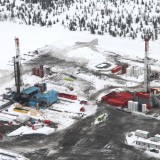
Hydraulic Fracturing operation in northeast BC

How Well Are We Regulating Hydraulic Fracturing in BC?

Share

I became interested in the “Fraccing” issue when I paddled the Peace River last year as part of the annual Site C protest. During my visit to Hudson’s Hope I was advised by community leaders to look at the Talisman operations on the Beryl Prairie Road and to visit the company’s water withdrawal sites at the Williston Reservoir and on the Peace River. My quick tour of these operations convinced me we have serious public policy issues that are not being addressed by the current government’s aggressive development of BC’s shale gas resources.

Subsequent research and discussions with people who have been paying attention to unconventional gas development for some time has led me to believe that BC must learn from other jurisdictions that are taking a more cautious and thoughtful approach to the use of hydraulic fracturing to extract shale gas. Unfortunately, two BC Ministers have discounted any calls for more public scrutiny or a more precautionary approach to fraccing in BC’s Peace Region. Both claim that BC has some of the best regulations in the world and, therefore, there is no need for concern.

So it’s “drill baby drill” for BC.

Unfortunately, the facts do not support the Ministers’ contention about the strength of BC’s regulations. While the province does have a new Oil and Gas Activities Act and the structure of BC’s Oil and Gas Commission (OGC) has been examined by other jurisdictions, the heart of BC’s regulatory framework is “results based” rather than “prescriptive” – meaning the industry basically self-regulates within a loose framework of objectives set by government.

Two documents available on the OGC website clearly illustrate weaknesses in BC’s regulatory framework: the Failure Investigation Report on the 2009 Encana Swan Wellsite leak and a 2010 Safety Advisory on “communication” between drilling operations.

The 2009 failure and leak at the Encana Swan Wellsite resulted in the release of 30,000 cubic metres of sour gas. Residents reacted to the leak and evacuated the area before Encana was able to verify the leak was occurring and initiate emergency procedures or notify appropriate emergency agencies.

The Failure Investigation Report concludes that “the Emergency Response Plan used by Encana was not updated with current information,” that Encana failed “to follow established procedures for well cleanup monitoring,” that Encana’s “monitoring equipment at the site did not provide” timely communication of the leak to Encana personnel, and that the setup of their emergency shutdown valve “did not enable remote or automated shut in of the failed piping.”

The OGC issued twelve directives to Encana and states in its report that “Encana has provided a satisfactory response” to each directive; however, the real question is why Encana’s shortcomings were not discovered prior to a catastrophic failure.  The answer: the industry self-polices. The OGC presumes that each and every company will protect the health and safety of citizens – until they don’t, then the OGC investigates to find out why.

Unfortunately history, especially recent history, and especially the history of this particular sector, does not warrant this level of trust. To truly protect the public interest BC need more proactive oversight of the industry than failure investigations.

The second example of the inherent weakness of BC’s current regulatory regime can be found in the OGC’s May 20, 2010 Safety Advisory “Communication During Fracture Stimulation.”

This Advisory points out that when a horizontal well is “stimulated” during a fraccing operation an adjacent horizontal well can be “kicked.” Translation: the toxic fluids used to blast open the shale formation at one wellsite can go further than they’re supposed to (up to 750m further according to the Advisory) and end up blasting their way into an already active well, causing that well to blow out. In the OGC’s own language “communication” between wells can “result in suspended production, substantial remediation costs and pose a potential safety hazard.”

The OGC was “aware” of 18 such incidents in BC when it published its Advisory in 2010 and noted all were dealt with successfully. More telling though is the following statement in the Advisory: “Fracture propagation via large scale hydraulic operations has proven difficult to predict. Existing planes of weakness in target formations may result in fracture lengths that exceed initial design expectations” (emphasis is mine).

Given the OGC’s admission of the high degree of unpredictability of fraccing operations and the threat to public safety that “communication” between operations poses, it seems reasonable to expect that the OGC would have established an enforceable regulation creating a safe buffer zone to prevent “communication” and “kicks” from occurring. Not so, the OGC’s Advisory simply recommends that “operators cooperate through notifications … where fracturing takes place within 1000m” of other operations and reminds operators of their obligation to report any “communication between fracture operations” to the OGC.

That’s why the OGC’s document is called an “Advisory:” it is restricted to simply advising competitive companies that they need to cooperate in order to protect the public interest.

Along with more deliberate oversight of the industry, BC clearly needs more prescriptive regulations over an industry that relies on a process that is highly unpredictable and which poses potential safety hazards every time a well is “stimulated.”

Over and above these obvious weaknesses in the regulatory regime are a host of other issues which require more investigation and caution rather than a “drill baby drill” mindset by Ministers: overall public health and safety issues, water use and regulation, cumulative land use impacts, first nations rights, and climate change impacts to name a few.

Rather than discounting reasonable calls for more caution and public input into hydraulic fracturing by claiming BC is already well regulated, the government should use the current downturn in the natural gas sector to conduct a full public review of this sector to ensure BC does have the right regulatory regime for this relatively new and highly unpredictable approach to extracting natural gas from BC’s deep shale bed formations.

Bob Simpson is the Independent BC MLA for Cariboo North

Share

BREAKING NEWS: Alberta pipeline sprouts ‘significant leak’

Share

From the Calgary Herald – April 30, 2011

by Reuters

A 200,000 barrel per day oil pipeline belonging to a unit of Plains
All American Pipeline LP ruptured on Friday, spilling hundreds of
barrels of oil, regulators said.

Plains’ Rainbow pipeline, which
runs from Zama in northwest Alberta 770 kilometres south to Edmonton,
sprung a leak at 7: 30 a.m. local time.

“It’s not a small leak,”
said Davis Sheremata, a spokesman for Alberta’s Energy Resources
Conservation Board, which regulates pipelines in the province.

“It’s a significant leak, in the hundreds of barrels.”

The leak occurred 100 km northeast of Peace River, the regulator said.

The
ERCB said the line was shut down and the company and authorities were
working on cleanup efforts. The regulator said the spill was 300 metres
from flowing water and seven kilometres from the nearest residence.

It’s
the second leak from an Alberta pipeline in a week. Kinder Morgan
Energy Partners’s 300,000 bpd Trans Mountain oil pipeline was shut for
five days beginning on April 22 after a small leak was spotted on the
line’s right-of-way 150 km west of Edmonton.

Read original article
Share

Rosebud landowner launches $33M lawsuit against Encana, government over methane in drinking water

Share

From the The Calgary Herald – April 27, 2011

by Kelly Cryderman

CALGARY — A southern Alberta landowner who has long claimed coal bed
methane drilling polluted her well has launched a lawsuit demanding more
than $10 million each from Encana, the Alberta government and the
province’s energy regulator.

Jessica Ernst, 54, is one of
the province’s most outspoken critics of drilling methods such as
fracking — where water, chemicals and sand are blasted deep underground
to break up coal formations and release natural gas.

In a
statement of claim filed at the courthouse in Drumheller, Alta., she
states the failure of Alberta’s Environment Department and the Energy
Resources Conservation Board to investigate her case and enforce
regulations “served as a government coverup of environmental
contamination caused by the oil and gas industry.”

Ernst
claims that a decade ago Encana “began a risky and experimental drilling
program for shallow coal bed methane at dozens of wells in the area
around Rosebud,” a small hamlet northeast of Calgary.

Ernst,
an environmental consultant for the oil and gas industry who lives near
the hamlet, alleges the natural gas giant released a large amount of
contaminants into underground freshwater supplies.

“As a
result, Ms. Ernst’s water is now so contaminated with methane and other
chemicals that it can be lit on fire,” said the legal statement.

None of Ernst’s claims have been proven in court.

In
2008, an Alberta Research Council report concluded the methane found in
the wells in the area was naturally occurring, a phenomenon that exists
in parts of Alberta where underground water supplies come from coal
seams. The report stated that “energy development projects in the areas
most likely have not adversely affected the complainant water wells.”

On
Tuesday, Encana spokesman Alan Boras said the company had just become
aware of the Ernst lawsuit and “as a result we would have to review it
before we made any comment — if we did at all, because it’s before the
courts.”

Alberta Environment spokesman Trevor Gemmell also declined to comment, saying the matter is before the courts.

At the ERCB, spokesman Bob Curran said in an email the board has not been served with a statement of claim.

Ernst
will hold a news conference in Calgary Wednesday, and said in a news
release she will bring her story to the United Nations Commission on
Sustainable Development in New York next week.

Fracking, or
hydraulic fracturing, is a method used by drillers to extract
unconventional natural gas resources being tapped as conventional
supplies run low.

Ernst is seeking damages of at least
$11.7 million from Encana, $10.7 million from Alberta Environment and
$10.75 million from the ERCB.

Read original article

Share

Pennsylvania blowout fuels fracking fears

Share

From UPI.com – April 22, 2011

PITTSBURGH, April 22 (UPI) — A blowout at a Pennsylvania natural gas
well has fueled increased concerns about the already controversial
practice of hydraulic fracking.

The well, owned by Chesapeake Energy Corp., experienced an equipment
failure Tuesday, sending chemical-laced water over the drilling site in
Bradford County, Pa. and into nearby waterways, including Towanda Creek,
which feeds into the Susquehanna River.

“There have been no injuries and there continues to be no danger to
the public,” Brian Grove, senior director for corporate development at
Chesapeake, said in a statement.

The company stopped all operations in the state and said Thursday that it had successfully sealed the leaking gas well.

The accident comes one year after an explosion sunk the Deepwater
Horizon oil rig in the Gulf of Mexico, resulting in 11 deaths and the
worst offshore oil spill in U.S. history, and at a time when hydraulic
fracturing, or “fracking,” is coming under increased scrutiny from state
and federal officials.

The technique, used to release vast reserves of natural gas buried
underground, involves massive amounts of water, sand and chemicals
injected at high pressures to fracture rock and release the stored gas.

A report released by Democratic members of Congress last week said
that more than 650 of the chemicals used in fracking were carcinogens.

In the fracking process, anywhere from 10 to 40 percent of the water
injected into the well returns to the surface carrying drilling
chemicals, high levels of salts and sometimes naturally occurring
radioactive material. The state of Pennsylvania has allowed drillers to
discharge much of the waste through sewage treatment plants into
rivers, The New York Times reports.

An investigation by the Times found that more than 1.3 billion
gallons of wastewater was produced by Pennsylvania wells over the past
three years. But treatment plants to which the wastewater was sent
weren’t equipped to remove many of the toxic materials contained in the
drilling waste.

Environmental group American Rivers has called on Congress to push
for the restoration of the Environmental Protection Agency’s ability to
regulate hydraulic fracturing under the Safe Drinking Water Act, removed
in a 2005 energy bill referred to as the “Halliburton loophole.”

“In case last year’s BP oil spill wasn’t enough of a wake-up call,
now we have another disaster, this time in Pennsylvania. The American
people have had it with the industry’s false assurances,” said Andrew
Fahlund, senior vice president for conservation at American Rivers.

Pennsylvania’s massive Marcellus Shale reserve is believed to hold
enough gas to supply the country’s energy needs for heat and
electricity, at current consumption rates, for more than 15 years. Some
3,300 Marcellus gas-well permits were issued to drilling companies last
year, compared to 117 in 2007.

Read original article and watch video

Share

Gasoline spill likely killed thousands of Goldstream River salmon

Share

Fromt he Times-Colonist – April 17, 2011

by Kim Westad

Thousands of salmon are expected to have been killed by a large
gasoline spill that poured into Goldstream River during the weekend.

A Columbia Fuels truck smashed into the rock face and rolled, damaging the cab and one of the two tanks the engine was pulling.

About
40,000 litres of gasoline are estimated to have been spilled and much
of that flowed into the river at the side of the highway. The truck hit
the rock wall beside a small waterfall that flows across the road to the
river, and that helped move the gas.

“Gasoline is very toxic to aquatic life,” said Graham Knox, the Ministry of Environment’s manager of environmental emergencies.

Ministry
biologists, an oiled-wildlife specialist and staff from Environment
Canada were on the scene Sunday conducting an assessment of the site.
There was little apparent damage at the site itself, but as they moved
downstream toward the estuary, they saw “hundreds” of dead fish in the
water, Knox said.

With that many visible to the eye, the number killed will be significantly higher, he said — likely in the thousands.

“It is a significant amount of fish that have been killed,” he said.

Gasoline
travels and kills quickly in water. The fish would likely have died as
soon as the gasoline went into their gills, Knox said.

The
ministry tries to collect the dead fish, Knox said, so that other
animals don’t eat them and potentially ingest contaminants. It’s
unlikely the fish ingested the gas, he said, although that will be
reviewed.

Gasoline is more toxic to wildlife than other types of
oil, Knox said. The only positive is that being lighter, it evaporates
quickly and breaks up. Crude oil is more persistent and difficult to
cleanse from the environment.

Small excavators were on scene Sunday at the dump site, removing the roadside soil. It will be replaced.

The
Environmental Management Act specifies that the party at fault is
responsible for much of the remediation costs. Columbia Fuels has been
“very co-operative from the start” on that, Knox said.

“They are proceeding with all of our requests and getting the work done.”

Columbia
will hire an environmental consultant to conduct various tests of the
soil and submit a report to the Ministry of Environment, Knox said.

Read original article

Share

New York Times: Fracking Chemicals Were Injected Into Wells, Report Says

Share

From the New York Times – April 16, 2011

by Ian Urbina

WASHINGTON — Oil and gas companies injected hundreds of millions of
gallons of hazardous or carcinogenic chemicals into wells in more than
13 states from 2005 to 2009, according to an investigation by
Congressional Democrats.

 The chemicals were used by companies during a drilling process known as
hydraulic fracturing, or hydrofracking, which involves the high-pressure
injection of a mixture of water, sand and chemical additives into rock
formations deep underground. The process, which is being used to tap
into large reserves of natural gas around the country, opens fissures in the rock to stimulate the release of oil and gas.

Hydrofracking has attracted increased scrutiny from lawmakers and
environmentalists in part because of fears that the chemicals used
during the process can contaminate underground sources of drinking
water.

“Questions about the safety of hydraulic fracturing persist, which are
compounded by the secrecy surrounding the chemicals used in hydraulic
fracturing fluids,” said the report, which was written by
Representatives Henry A. Waxman of California, Edward J. Markey of Massachusetts and Diana DeGette of Colorado.

The report, released late Saturday, also faulted companies for at times
“injecting fluids containing chemicals that they themselves cannot
identify.”

The inquiry over hydrofracking, which was initiated by the House Energy and Commerce Committee
when Mr. Waxman led it last year, also found that 14 of the nation’s
most active hydraulic fracturing companies used 866 million gallons of
hydraulic fracturing products — not including water. More than 650 of
these products contained chemicals that are known or possible human
carcinogens, regulated under the Safe Drinking Water Act, or are listed
as hazardous air pollutants, the report said.

A request for comment from the American Petroleum Institute about the report received no reply.

Matt Armstrong, an energy attorney from Bracewell & Giuliani that
represents several companies involved in natural gas drilling, faulted
the methodology of the congressional report released Saturday and an
earlier report by the same lawmakers.

“This report uses the same sleight of hand deployed in the last report
on diesel use — it compiles overall product volumes, not the volumes of
the hazardous chemicals contained within those products,” he said.
“This generates big numbers but provides no context for the use of these
chemicals over the many thousands of frac jobs that were conducted
within the timeframe of the report.”

Some ingredients mixed into the hydraulic fracturing fluids were common
and generally harmless, like salt and citric acid. Others were
unexpected, like instant coffee and walnut hulls, the report said. Many
ingredients were “extremely toxic,” including benzene, a known human
carcinogen, and lead.

Companies injected large amounts of other hazardous chemicals, including
11.4 million gallons of fluids containing at least one of the toxic or
carcinogenic B.T.E.X. chemicals — benzene, toluene, xylene and
ethylbenzene. The companies used the highest volume of fluids containing
one or more carcinogens in Colorado, Oklahoma and Texas.

The report comes two and a half months after an initial report by the
same three lawmakers that found that 32.2 millions of gallons of fluids
containing diesel, considered an especially hazardous pollutant because
it contains benzene, were injected into the ground during hydrofracking
by a dozen companies from 2005 to 2009, in possible violation of the
drinking water act.

A 2010 report by Environmental Working Group,
a research and advocacy organization, found that benzene levels in
other hydrofracking ingredients were as much as 93 times higher than
those found in diesel.

The use of these chemicals has been a source of concern to regulators
and environmentalists who worry that some of them could find their way
out of a well bore — because of above-ground spills, underground
failures of well casing or migration through layers of rock — and into
nearby sources of drinking water.

These contaminants also remain in the fluid that returns to the surface after a well is hydrofracked. A recent investigation
by The New York Times found high levels of contaminants, including
benzene and radioactive materials, in wastewater that is being sent to
treatment plants not designed to fully treat the waste before it is
discharged into rivers. At one plant in Pennsylvania, documents from the Environmental Protection Agency
revealed levels of benzene roughly 28 times the federal drinking water
standard in wastewater as it was discharged, after treatment, into the
Allegheny River in May 2008.

The E.P.A.
is conducting a national study on the drinking water risks associated
with hydrofracking, but assessing these risks has been made more
difficult by companies’ unwillingness to publicly disclose which
chemicals and in what concentrations they are used, according to
internal e-mails and draft notes of the study plan.

Some companies are moving toward more disclosure, and the industry will
soon start a public database of these chemicals. But the Congressional
report said that reporting to this database is strictly voluntary, that
disclosure will not include the chemical identity of products labeled as
proprietary, and that there is no way to determine if companies are
accurately reporting information for all wells. In Pennsylvania, the
lack of disclosure of drilling ingredients has also incited a heated
debate among E.P.A. lawyers about the threat and legality of treatment
plants accepting the wastewater and discharging it into rivers.       

Read original article

Share