All posts by Common Sense Canadian

Canadian Food Inspection Agency Stops Investigating Health Claims of Canadian Food Products Due to Lack of Funding

Share

Read this story from The Province on the Canadian Food Inspection Agency – which has recently come under fire for covering up the ISA salmon virus in BC – which is halting its investigations of health claims made by food products due to a lack of federal funding. (Dec. 2, 2011)

The federal government has abruptly stopped testing grocery store product labels for exaggerated nutrition information and unproven health claims.

The Canadian Food Inspection Agency put the sampling program “on hold indefinitely due to budgetary constraints” after test results from previous years showed widespread problems with food labels on store shelves.

The controversial decision was taken just days before the 2011/12 fiscal year started in April. A “post-meeting addendum” further clarified that all “retail surveys” have been postponed.

Inspectors will continue to follow up on consumer complaints.

The move to pull the plug on proactive and random sampling of a specific number of food products in stores follows a decision earlier this year to suspend another project that policed nutrition claims made by chain restaurants and coffee shops.


Read more: http://www.theprovince.com/life/Federal+teams+halt+testing+health+claims/5801083/story.html

Share
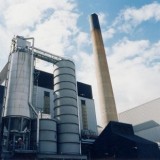
Canada is backsliding on waste management, choosing incinerators like this one over more sustainable alternatives

Is Canada Dropping the Ball on Sustainable Waste Management?

Share

Once upon a time North American waste activists looked to Canada for cutting edge moves towards sustainable waste management. Looking back we remember the ban on incineration by the Ontario NDP; the blue box program; the pay-by bag systems; EPR in Vancouver; Ottawa’s Take it Back program; Toronto’s declaration of a Zero Waste program and door to door to collection of compostables and recyclables throughout Prince Edward Island and Nova Scotia. Just a few years back Canada was poised for a genuine move towards a Zero Waste future but over the last few years we have seen a return to the sloppy and wasteful efforts at the back end of the problem with a rash of incinerator (and incinerators in disguise like gasification and plasma arc facilities) proposals to destroy rather than recover its waste.

We have seen the Alberta government subsidize the building of a gasifying incinerator plant in Edmonton; the Durham-York region succumb to the efforts of an American waste company (Covanta) to build a huge mass burn incinerator despite intense citizen opposition. Ironically, despite the proclaimed goal of being self-sufficient in waste disposal this project will involve exporting the ash produced (at least 25% of the trash burned) to New York state. Adding still further irony to this “democratic” decision, the politician that spearheaded the incinerator deal – Roger Anderson – does not hold an elected position! Now flushed with victory this same American waste company is angling to build an incinerator in the Peel region in Ontario as well as one or more in the Vancouver region (it has already bought out the company that once ran the Burnaby incinerator).

Then worst of all, a few weeks ago it was announced that the Ottawa city council had voted 22 to 1 to commit to send a substantial part of its wastestream to the experimental Plasco plasma arc incinerator at the Trail Road landfill. This despite the fact that after 4 years of trying the company has yet to produce any energy on a continuous basis. In fact, when members of the Los Angeles Public Works department visited the facility the company failed three times to get the plant running!

But the really sad part about this is not the support being given by Canada’s capital city to an experimental project –with little or no public input – but rather the whole notion of supporting an effort to destroy resources in any fashion. Burning things cannot be considered sustainable. It is a huge waste of the energy used in extraction, manufacture and transport of the materials burned. It is also a huge wasted opportunity to fight global warming, let alone the economic opportunities available in reuse, repair, recycling, composting and re-design.

Our task in the 21st century is not to get better and better at destroying discarded materials but to stop making products and packages that have to be destroyed. This is the heart of the Zero Waste strategy. Waste is not a technological problem but a social one. It is not going to be solved by magic machines but with better organization, better education and better industrial design.

Such costly mistakes may have been understandable 30 years ago but today with San Francisco (a city of 850,000) having achieved a diversion rate of 78% en route to a zero waste goal by 2020, it is inexcusable. For heaven’s sake even Naples in Italy has now adopted a zero waste goal!

Instead of building costly incinerators in front of landfills what we need are residual screening facilities that incorporate a zero waste research facility to study the non-recyclable fraction. Nova Scotia has developed the first half of such a facility and uses it to biologically stabilize the dirty organic fraction above ground before it causes problems (odor, methane and leachate) underground. What is need now is the incorporation of the second step: the research facility. Edmonton was ideally placed to do just that but sadly opted for a burner instead.

Such a research facility should involve professors and students from higher education so that this whole effort can be used as a laboratory for sustainability. This facility would represent the nexus between community responsibility at the back end of the problem and industrial responsibility at the front end.

Incinerators set out to make the residuals disappear. The Zero Waste strategy sets out to make them very, very visible. Magic machines, whether they are Covanta type mass burn incinerators or Plasco type plasma arc facilities, miss the point. “If it isn’t sustainable it isn’t acceptable.”

The message that the community needs to deliver to industry is, “If we can’t reuse it, recycle it or compost it, you shouldn’t be making it. We need better industrial design for the 21 st century.”

Professor Paul Connett is a graduate of Cambridge University and holds a Ph.D. in chemistry from Dartmouth College. Since 1983 he taught chemistry at St. Lawrence University in Canton, NY where he specialized in Environmental Chemistry and Toxicology. He retired in May 2006 and is currently writing a book on Zero Waste that will be published in Italy in 2012. Ralph Nader said of Paul Connett, “He is the only person I know who can make waste interesting.”

Buddy Boyd is leading zero waste efforts on the Sunshine Coast, where he and his wife Barb run the Gibsons Recycling Depot.

Share

Border Security Deal’s Ugly Twin Carries Major Energy and Environmental Implications for Canada

Share

Harper’s government officially announced in recent weeks a new Border Security deal with the US. However, little press space was given to the ugly twin of this deal – the Canada-United States Regulatory Cooperation Council (RCC) and their “Joint Action Plan”. The RCC was set up to “streamline” regulations in four economic sectors engaged in cross-border trade. These sectors are Food & Agriculture, Transportation, Energy and Environment and Personal Care Products.

But a funny thing happened on the way to the press release for the RCC’s Joint Action Plan. The word “Energy” was dropped from the Energy and Environment sector. That’s right. Never mind that energy, including oil, natural gas and hydroelectricity, is arguably the most important sector of Canada-US trade in today’s constrained energy supply world.
 
Mounting opposition to pipeline development on both sides of the border make the Energy word a bit loaded politically for Harper and especially Obama right now. (Visions of the protesters surrounding the White House and the BC First Nations announcement of opposition to the Northern Gateway pipeline float in my head as I write this). At any rate, it was conveniently dropped. The new Environment-only sector in the Action Plan concerns itself with fairly benign co-operation on air quality standards for emissions from light duty vehicles and trains and levels of particulate matter in air.
 
To understand what poison pills may await us in the not-talked-about-but-still-there Energy trade sector, a look at the RCC Consultation Report released in February of this year is required.

This document is important in that it contains the complete consultation list of regulatory harmonization items to be considered for implementation. That is the basis of Action Plan items, which is clear from the page 5 Action Plan statement: “Stakeholder input was key in developing this initial Joint Action Plan, which represents a first set of actions and initiatives that will begin the process of developing more closely aligned regulatory systems between the U.S. and Canada.”

And also from the page 9 Statement: “…there were a number of suggested initiatives that were considered but not included in the initial Joint Action Plan. The RCC will continue to examine these suggestions as it develops areas for future work.”
 
Of the eight suggested initiatives which the government chose to list in the Consultation Report’s Energy and Environment section (Appendix B, page 22) consider the following three:

  1. Streamline permissions for and construction of new cross-border energy infrastructure, e.g.,a single Canada–U.S. regime for permitting oil and gas pipelines.
  2. Ensure common approaches to nuclear liability in the event of litigation arising from nuclear incidents.
  3. Avoid policies that discriminate against particular fuel sources, such as low-carbon fuel standards (for types of crude oil) or renewable electricity standards (for large-scale hydro).

As is always the case, the public is the last to find out the government’s plans, but it takes only a modicum of common sense to see that Harper’s moving of the Environmental Assessment Process to the National Energy Board from the Ministry of Environment, the subsequently announced streamlining of the Environmental Assessment Process, and the budget cuts to the Ministry Environment resulting in fewer and fewer monitoring facilities and scientists to staff them or to write reports on environmental implications of resource extraction are all related to establishing a “single Canada–U.S. regime” for pipelines and other cross-border infrastructure.

In the wake of both the Fukushima disaster in Japan and the privatization of the Canada’s nuclear industry, the limiting of liability in the wake of nuclear accidents is particularly chilling. One expects that like the US (which, for example, limits liability on the costs of oil spills to a ridiculously low amount in dollar terms), we can expect to see similar regulations in Canada regarding nuclear accidents.
 
And finally, neither Tar Sands oil nor hydroelectricity will be “discriminated” against in the future by regulations in either country. The term “Large-scale” hydro projects remains undefined in the document. But surely Site C Dam would qualify for non-discrimination and perhaps some of the larger ruin-of-the-river projects.
 
The RCC documents are all written with the outdated and disproven arguments of increased “customer choice” and “decreased customer cost”, hand-in-hand with public safety and environmental protection enhancement. The public knows none of this is true. But Harper marches on, head down and in step with his corporate buddies, to the beat of the trickle-down economics drum, while global markets implode, citizens arise en masse and peak everything envelopes the world. No wonder he and Obama need to continue to build a police security state to enforce their policies on us.
 
The other three trade sector action plans and consultation report items will be discussed in future postings. They are equally, if not more, disturbing.

Nelle Maxey is a grandmother who lives in the beautiful Slocan Valley in south-eastern BC. She believes it is her obligation as a citizen to concern herself with the policies and politics of government at the federal, provincial and local level.

Share

Republican’s Attempt to Force Obama into Hurried Decision on Keystone XL May Backfire, Killing Pipeline

Share

Read this blog from the Natural Resources Defense Council, detailing how the forced inclusion by Republicans of a requirement for President Obama to make his decision on the controversial Keystone XL Pipeline in 60 days may very well amount to a Pyrrhic victory, forcing Obama to kill the pipeline altogether.

NRDC responded by calling out the inclusion as nothing but a political ploy.  My colleague Susan Casey-Lefkowitz, issued the following statement:


“Special interest riders do not belong in legislation designed to
help the American people. Republicans took the payroll tax-cut extension
bill hostage and delivered a year-end bonus to Big Oil. The president
went along in order to save hard-working Americans from a tax increase
on January 1, 2012. We get that.


“But with the Republicans forcing the president’s hand, he will have
no choice but to reject the Keystone XL tar sands pipeline as not in the
national interest.”


The President said last week that he would not accept the inclusion of the pipeline tacked on to the tax extension legislation.  


Yesterday evening, a senior Administration official made it clear the
President intends to stand by his statement.  In a Reuters piece
entitled, “Obama backs tax deal but pipeline now in doubt”,
the senior official is quoted saying that Republican insistence means
the pipeline ”almost certainly will not be built” because the President
has made clear that he will not approve the pipeline without time for an
adequate review of the health, safety and environmental risks.

This
view was echoed by Senate Democrats.  Senator Schumer, commenting to
Bloomberg News, said that the inclusion of the provision was a “Pyrric victory” for the Republicans because the President won’t be forced into a decision.
(Dec. 17, 2011)

Read more: http://switchboard.nrdc.org/blogs/lizbb/will_republican_high_stakes_ga_1.html

Share

New Report: Tar Sands Carbon Emissions on the Rise

Share

Read this story from CBC.ca on a new report from the oil and gas industry’s lobby that confirms carbon emissions from the Alberta Tar Sands are on the rise.

The intensity of oilsands carbon emissions — the amount of greenhouse
gases created per every barrel of oil produced — increased by two per
cent between 2009 and 2010, according to an industry report.


The 2010 Responsible Canadian Energy progress report by the Canadian
Association of Petroleum Producers (CAPP) also found that overall
greenhouse gas (GHG) emissions from the oilsands rose 14 per cent in the
same time period as the number of oilsands operations expanded.


“The increase in total GHG emissions is a result of the significant
increase in both mining and in situ production, both of which require
more fuel — for mine trucks, in situ steam production and upgraders,”
read the report.


The document offered the same explanation for the increase in intensity. (Dec. 16, 2011)

Read more: http://www.cbc.ca/news/business/story/2011/12/16/pol-capp-oil-industry-emissions-report.html

Share

Enbridge Fined $100,000 per Death for Negligence in 2003 Ontario Blast Whcih Claimed the Lives of Seven

Share

Read this story from CBC.ca reporting on the $700,000 fine levied at Enbridge relating to a fatal 2003 blast in Etobicoke, Ontario, which stemmed from the lack of proper markings for a gas line the company operates.

The natural gas explosion levelled a strip mall on Bloor Street West
near Kipling Avenue in April of that year, destroying three businesses
and several homes.

It happened when a construction company doing road work struck a gas line that was not properly identified and marked.


Gas escaped into the basement of the building and was ignited, the province said in a news release Friday.


Enbridge, based in North York, was fined $350,000 for violating the
Occupational Health and Safety Act and another $350,000 for violating
the Technical Standards and Safety Act.
(Dec. 16, 2011)

Read more: http://www.cbc.ca/news/canada/toronto/story/2011/12/16/toronto-etobicoke-explosion-fines.html

Share

Fraser Riverkeeper Scores Victory for Regulation of Sewage From Vancouver’s Iona Treatment Facility

Share

Read this media advisory from Fraser Riverkeeper regarding the announcement today that the Commission on Environmental Co-operation – an international regulatory body set-up under NAFTA – will conduct an investigation in possible failure of Canada to enforce environmental laws with regards to the Iona Sewage Treatment Facility in the mouth of the Fraser River.

The Commission, set up under the North American Free Trade Agreement, has authority to investigate wherever a member nation is failing to live up to its own environmental laws. Fraser Riverkeeper and the David Suzuki Foundation, working with Waterkeeper Alliance groups throughout North America, filed a complaint with the Commission in April, 2010, based on Canada’s failure to enforce the Fisheries Act against the Iona Sewage Treatment Facility in the Fraser River.

“The Iona facility continues to this day to fail its toxicity tests,” said Doug Chapman, Fraser Riverkeeper. “That means that the discharge from the plant kills fish: the very Fraser River sockeye stocks whose alarmingly low numbers are currently the subject of the Cohen Commission hearings in Vancouver.” (Dec. 16, 2011)

Read more: http://www.fraserriverkeeper.ca/2011/12/cec-to-investigate-metros-sewage-treatment-record/

Share

ISA Virus Researcher Faced Political Pressure Due to Positive Test Results

Share

Read this report form The Winnipeg Free Press on the revelation at the Cohen Commission into disappearing sockeye by ISAv expert Dr. Fred Kibenge that he faced political pressure due to his positive test results suggesting ISAv exists in wild BC salmon.

VANCOUVER – A scientist who found signs of a potentially lethal fish
virus in B.C. salmon has told a federal commission he’s come under
government pressure for work he considers “above question.”


The results of Fred Kibenge, who runs a lab in P.E.I., were
widely publicized in October after he detected infectious salmon
anaemia in two of 48 sockeye smolts.

He told a special hearing for the inquiry studying the
collapse of the Fraser River salmon run that since then, he’s faced
difficult questioning from the Canadian Food Inspection Agency.
(Dec. 16, 2011)

Read more: http://www.winnipegfreepress.com/arts-and-life/life/sci_tech/findings-of-virus-in-bc-salmon-brought-government-pressure-scientists-135747363.html?mid=5559

Share

Serious Finacial Costs and Trade Implications for Canada from Abandoning Kyoto

Share

Read this article from The Globe and Mail on the very real risk of serious economic impacts to Canada stemming from the Harper Government’s decision to abandon its treaty commitments under the Kyoto Protocol.

There’s politics in climate change and money at stake in talks. Moral arguments aside, the politics will matter.

Canada’s
Kyoto withdrawal was an unusually big news story for a country that
gets little mention, playing as a big deal in international media. It
was a top Web-hit story for the BBC. Reporters kept asking U.S. climate
negotiator Todd Stern about Canada. Canada’s emissions story jumped to
the masses. It could be the new seal hunt. Japan and Russia won’t meet
Kyoto targets either, but Canada withdrew and got headlines.

There was also pointed criticism from countries such as China and France, and many more…

…It’s not just that the oil sands are a fast-growing source of
emissions. Canada is 30 per cent over Kyoto targets, and the oil sands
are just part. Canada is the eighth-largest greenhouse-gas emitter.
China is largest, but per person its emissions are one-third of
Canada’s. Ottawa has no regulation plan for big emitters. Canada can’t
combat the story that the oil sands make us dirty.

One day,
politics will bring cost. A 2009 U.S. bill to apply tariffs on goods for
countries that fail to meet climate standards passed the House but died
in the Senate. Mr. Levi expects Europeans or others to revive the idea.

Mr. Leach said: “I think you’re going see countries looking to apply blame by punishment.” (December 15, 2011)

Read more: http://www.theglobeandmail.com/news/politics/quitting-kyoto-could-cost-canada-down-the-road/article2271728/

Share

Salmon Virus Has Been in BC for at Least 25 Years, Dr. Kristi Miller Tells Cohen Commission

Share

Read this story form CBC.ca reporting on the revelation from the Cohen Commission into disappearing sockeye that ISA virus or a similar virus has been in BC’s wild salmon since at least 1986, based on studies of sockeye livers from that time frame by Dr. Kristi Miller.

Department of Fisheries (DFO) biologists have told a federal inquiry
that fish samples, dating back more than two decades have tested
positive for a potentially lethal wild sockeye fish virus — but that
fact wasn’t publicly reported.


Dr. Kristi Miller, the head of molecular genetics for DFO in Nanaimo,
told the Cohen Commission on Thursday that frozen samples dating back
to 1986 have been tested, and show infectious salmon anemia (ISA) has
been in B.C. waters for at least 25 years.(Dec. 15, 2011)

Read more: http://www.cbc.ca/news/canada/british-columbia/story/2011/12/15/bc-salmon-virus-claims.html

Share