Read this report from the Toronto Star on the arrest of Canadian activist and author Naomi Klein in Washington, DC at the protest over the proposed Keystone XL Pipeline from the Alberta Tar Sands to refineries on the US Gulf Coast.
Klein was arrested alongside fellow Canadian Gitz Deranger, from the
Athabasca Chipewyan First Nation, and several American native leaders on
Day 13 of the protest. “I have seen the devastation of our environment and people’s health
with increased cancer deaths,” Deranger said before his arrest. “If
Obama approves this pipeline, it would only lead to more of our people
needlessly dying.” (Sept. 2, 2011)
Read this report from USA today on Nebraska Governor Dave Heineman’s call for President Barack Obama and Secretary of State Hillary Clinton to reject the proposed Keystone XL Pipeline from the Alberta Tar Sands to refineries on the US Gulf Coast.
“Heineman said he supports pipeline projects but
opposes the proposed TransCanada’s Keystone XL route that would cross
the vast Ogallala aquifer. In a letter to
Obama and Clinton, the Republican governor said he was concerned about
the potential threat to the crucial water source for Nebraska’s farmers
and ranchers.” (Sept 1, 2011)
Read this article form the Huffington Post on the arrest of Elijah Zarlin, a former new media writer for the Obama campaign, at the protests in Washington, DC over the proposed Keystone XL Pipeline from the Alberta Tar Sands to the US Gulf Coast.
“Like many of the 2,000 volunteers who have signed up to participate in
the White House sit-ins, Zarlin, who now works as a campaign manager at
CREDO Action, is calling on Obama to block approval of TransCanada’s
Keystone XL. The oil pipeline would run from the Canadian tar sands in
Alberta to refineries on the coast of the Gulf of Mexico.” (Aug 30, 2011)
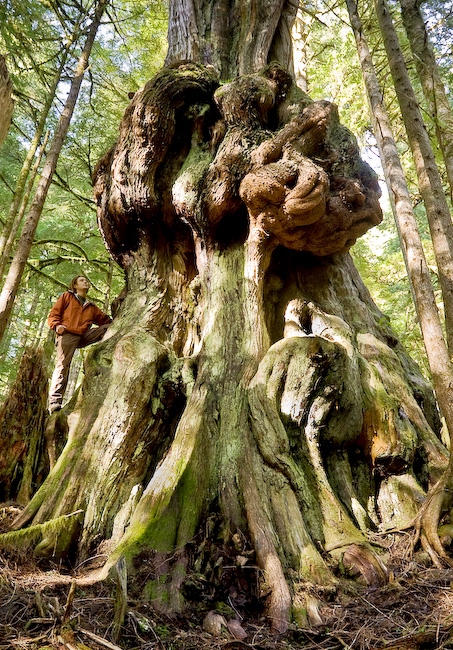
A scant 10 minute walk off a logging road near the BC’s West Coast town of Port Renfrew is Avatar Grove, a stand of old cedars so majestic, powerful and gnarled that T. J. Watt said he and his colleagues from the Ancient Forest Alliance “were running around like kids in a candy store” when they found it in 2009 (Globe & Mail, July 23/11).
Watt, along with the co-founder of the Ancient Forest Alliance, Ken Wu, had been searching for just such an iconic stand of trees, one that would dramatize and catalyze enough awareness of old-growth forests to prevent further logging of the tiny remnant that still exists on southern Vancouver Island. Avatar Grove, as this stand was named, just might accomplish such an ambitious feat. Indeed, the Port Renfrew Chamber of Commerce, the BC Ministry of Forests and the company that had the right to log Avatar Grove, Teal Cedar Products Ltd, all concurred that the stand was so sensational that it should be protected.
But it nearly wasn’t. Watt and Wu found a cluster of 20 huge stumps nearby that had been logged the year before. These 900 year-old cedars may have been even more spectacular than the standing trees that were saved. “This would have surpassed Avatar Grove in grandeur – had we found it in time,” said Wu. And shortly after Watt found Avatar Grove, timber cruisers surveyed it for logging, hanging the ominous ribbons of plastic tape that marked a cutting boundary. After 1,000 years of growing, Avatar Grove came within a hair’s breadth of the chainsaw’s bite.
Given the awesome character of Avatar Grove, who cut down the neighbouring trees? What were the fellers thinking as the teeth of their chainsaws bit into millennium-old wood? What thoughts were passing through the minds of the timber cruisers who flagged Avatar Grove for a similar fate? Are “pieces of silver” so numbing of perception and so corrupting of judgment that people simply do not notice or recognize the miraculous when it is manifest? In another time under different circumstances the only appropriate answer to these questions would have been, “Forgive them, for they know not what they do.”
Because the trees in Avatar Grove awaken in us the sense of sacred that we do not usually possess, the work of environmentalists such as T.J. Watt and Ken Wu should qualify them as modern-day saints – a status they would probably reject. With their seeing and their conviction, with their dedication and passion, they open the eyes of the blind, bringing illuminating light into a place of dull darkness. They reveal the evident, proclaim the unmistakable, connect us to a wondrous obvious of which we were previously ignorant. What else explains why some trees are felled and others are saved? Whether or not a crucifixion occurs merely depends on the difference between recognizing or not recognizing, between awareness and unawareness.
Show people and they will see. The tourists who now flock to gaze at the massive trees of Avatar Grove are not so much tourists as pilgrims coming to enter the awe of something bigger and older than themselves, something that communes with the slow passage of eon and transcends the limits of self. These pilgrims are doing the same when they flock to such revered places as Banff, Jasper, the wild trails of Strathcona, or to any seashore, lake, mountain, river, valley or forest. Something primal and timeless lures them out of themselves and connects them to a mystery that is greater than anything they can possess, control or understand.
Saints awaken us to such awareness. They make pilgrims of us all. They show us the extraordinary so we will find it in the ordinary. If we are perceptive enough, we can learn to find the miraculous in any tree, any fish, any frog or any blade of grass. The ordinary is no less amazing than the extraordinary. If we are attentive enough, if we are open and receptive enough, every part of nature becomes a wonder that will reduce the greatest of our explanations to an awestruck silence.
No one can understand the utter magic pervading any of the living things that surround us. They are profound because they give context, companionship and meaning to our very existence – the outside of us that enters the inside of us through the miracle of awareness. Then a special stand of trees may infuse us with a moment by-moment sense of magic.
But a pilgrimage does not have to be a physical journey to Avatar Grove. Every time we watch a nature documentary we are paying vicarious homage to the life forces that permeate our planet. Such programs amaze us with the living vigour of reefs, tundra, grasslands, plains, jungles, and all the plants and creatures than enliven them with incredible and diverse vitality – a living planet that we are despoiling and diminishing with an astonishingly blind enthusiasm.
As the Canadian media guru, Marshall McLuhan, so wisely noted, we move through the present looking through a rear-view mirror at what is behind us – we don’t see what is, we only see what is past, where we have been and what we are losing. This principle applies with profound irony when we consider our current fascination with all the myriad wonders of nature that we revere through documentaries and pilgrimages. Just as we are celebrating and learning of nature’s incredible complexity and intricacy, our industrial exploitation is destroying them with alarming zeal.
This is why Avatar Grove is so important, why Watt and Wu were so invigorated by hope. This small stand of glorious trees is a signal, an icon, a symbol, a sign of what remains that we must not lose. It is a warning announcing that innumerable treasures are slipping into an irretrievable past. But Avatar Grove is also a promise and an awakening, if we can understand its deeper meaning. By honouring the extraordinary, perhaps we can learn to protect the ordinary.
Read this New York Times article on the disappointing decision by the Obama State Department to go ahead with a 3,200 km pipeline from the Alberta Tar Sands to the US Gulf Coast – despite a large protest movement against the project.
“In reaching its conclusion that the Keystone XL pipeline from the oil sands
deposits in Alberta would have minimal environmental impact, the
administration dismissed criticism from environmental advocates, who
said that extracting the oil would have a devastating impact on the
climate and that a leak or rupture in the 36-inch-diameter pipeline
could wreak ecological disaster. Opponents also said the project would
prolong the nation’s dependence on fossil fuels, threaten sensitive
lands and wildlife and further delay development of clean energy
sources” (Aug 26, 2011)
Anyone who is concerned about the arrival of pipelines and tankers to BC’s West Coast should be worried. The forces are mounting to make this province a bridge to an energy-hungry Asia. And the inevitable result will be – sooner or later – a ruptured pipeline despoiling pristine rivers and a broken tanker spilling millions of barrels of oil into one of the few undefiled ecologies remaining on our planet.
This scenario is being set by a dramatic change of circumstances in the last few years. Massive investments in the Alberta oil sands have created supplies of crude that must reach markets. To maximize profits, producers want more export options than the United States, the sole foreign recipient of this crude. As America’s economy slows and Asia’s booms, ocean access to the entire Pacific Rim becomes irresistible.
Meanwhile, the entire energy calculus has changed with the discovery of extraordinary quantities of shale gas in Canada and the US. America estimates it has enough gas to meet its domestic energy needs for 200 years. Canada’s supply, centred mostly in northern BC and Alberta, is similarly generous. Since the US will need less Canadian gas, the obvious place to sell it is to Asian markets. And that means pipelines and liquid natural gas (LNG) terminals for coastal BC.
All the pieces to support the arrival of such gas and oil terminals are falling into place. China has invested $10 billion in Alberta oil sands with the expectation rewards – oil in preference to profits. Royal Dutch Shell, Korean Gas, Japan’s Mitsubishi Corporation and Malaysia’s Petronas are all urgently planning for shipments of LNG from BC’s West Coast to their markets. The Montney and Horn River natural gas fields in BC, responsible for making this province the third largest gas producer in the world, could be supplying 5.5 billion cubic feet of gas per day by 2020 – gas that needs to reach buyers. Shell and Mitsubishi are considering that floating off-shore LNG plants would be ideal for BC’s rugged coast. They and other investors are speculating about at least four coastal pipelines and terminals to tranship LNG and oil to Asian markets (Globe & Mail, June 14/11).
If any British Columbians are nervous that foreign energy corporations are planning our future and threatening our treasured West Coast ecology, they will receive no solace from Canada’s Harper government. Foreign Minister John Baird has recently been to China, calling it our “friend” (Ibid. July 19/11) and emphasizing the critical importance of China’s energy and resource appetite in Canada’s economic plans. In Shanghai he declared that Canada’s “relationship [with China] has entered a new era over the past few years” and that it is “the centrepiece of a larger picture of the priority that we want to raise with Asia-Pacific (Ibid. July 21/11). To reinforce this support, Harper’s Minister of Natural Resources, Joe Oliver, has endorsed Enbridge’s Northern Gateway Pipeline – a $5.5 billion project that would bring oil and gas through 1,172 km of BC’s wilderness to Kitimat – before the public environmental assessment has even started (ForestEthics, July 10/11).
Meanwhile, in a disquieting move that is clearly designed to erase some of the inconvenient environmental obstacles that lie between Asian energy hunger and Canada’s export ambitions, the Harper government is eliminating 776 positions from Environment Canada, with a further downsizing of 5 to 10 percent next year. These are the professional biologists, chemists and climatologists who determine the difference between careful and reckless plans, the science-based experts who advise that policy occurs within responsible environmental constraints – if no one knows about any unfolding ecological wreckage, then it obviously doesn’t exist.
Despite huge opposition to the Northern Gateway Pipeline project in British Columbia, Enbridge is sensing success and is massaging the public with a national advertising campaign designed to humanize its image from one of the least responsible of all pipeline corporations to one that cares for the public over profits. Its corporate slogan, “Where energy meets people” has been neatly spliced into nearly full-page colour newspaper ads depicting Canadians energetically engaged in activities that are supposed to connect human challenges to the importance of pipelines, to show that personal fulfilment cannot be separated from Enbridge’s crucial role in our lives. “Where Energy Meets Culture” shows ballet dancers in a dramatic pose on an open stage, “Where Energy Meets Pride” shows four aboriginal runners wending their way along a lonely bucolic road, and “Where Energy Meets Victory” shows a team of five bicyclists racing serenely along a long stretch of prairie highway.
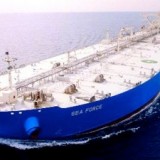
The psychology of these ads is both oblique and devious, effectively designed so people will forget that Enbridge wants to pipe oil to a West Coast port, that oil sands crude is particularly corrosive to pipelines, that this pipeline must traverse hundreds of pristine rivers and streams on its winding wilderness course to Kitimat, and that such a pipeline will invite almost one massive supertanker per day – about 225 per year – to some of the most treacherous, beautiful and vulnerable coastlines in the world.
So this is the scenario being designed for British Columbia. It is to become North America’s western departure point for energy exports to China, Japan, Korea, Malaysia and any Pacific Rim country that belongs to the distribution circuit. Huge profits are to be made by huge corporations. The Harper government’s plan for prosperity is founded on a view that disregards ecological concerns and forgets that all this gas and oil represents greenhouse emissions that are cooking our planet.
British Columbians who love our coastline, revere the Great Bear Rainforest and honour the wild majesty of our province had better gird their loins for a fight. It’s coming, it’s coming soon, and the enemy is amassing its forces. The outcome will determine BC’s future character, alter the world’s energy calculus and decide who is joining or resisting our drift toward environmental Armageddon.
Read and watch these video and print reports from CTV News on the start of week-long protests in Washington, DC over the proposed Keystone XL Pipeline from the Alberta Tar Sands to the US Gulf Coast – where some peaceful arrests are already being made. (Aug 20, 2011)
Read this op-ed in TheGeorgia Straight by the Wilderness Committee’s Tria Donaldson on the threat to Vancouver and Stanley Park from plans to dramatically increase oil exports out of Vancouver’s Westridge Terminal.
“Kinder Morgan has been operating the Trans Mountain pipeline for years,
but in 2007, the company started shipping larger quantities of oil. And
now Kinder Morgan wants to increase the capacity of their Trans Mountain
pipeline and reduce the amount of oil being refined locally, taking us
from 50,000 barrels a day of oil that is exported to close to 700,000
barrels a day of oil tanker traffic travelling through Vancouver’s
harbour” (Aug. 19, 2011)
Read this story from the Tyee’s Geoff Dembicki on the historic civil uprising brewing in Washington, DC over opposition to the proposed Keystone XL Pipeline and other climate flashpoints, like the Tim DeChristopher issue.
“The end-goal of this mass act of civil disobedience, hyped as the largest in American climate movement history, is to kibosh TransCanada Corp.’s proposed Keystone XL pipeline. For organizers, this proposal is about much
more than a US$7 billion steel artery pumping crude from Alberta’s oil
sands to Texas Gulf Coast refineries — it’s a referendum on the fate of the climate.” (Aug 19, 2011)
Read this report from a Norwegian news site of legal woes for the Norwegian oil giant in the Alberta Tar Sands.
“Statoil has been charged with several violations of water usage at the
site south of Fort McMurray in Alberta, and was called back into court
this week for another hearing. News bureau NTB reported that it remained
unclear whether the case would go to trial or whether Statoil, which
faces millions of Canadian dollars in fines, would agree to pay a
settlement.” (August 17, 2011)