All posts by Common Sense Canadian

HSBC: BC Pipelines More Strategically Important than Keystone XL

Share

Read this article from the Vancouver Sun on the president of HSBC Canada’s comments at a recent conference in BC, suggesting that oil pipelines from the Alberta Tar Sands to BC’s coast are of greater strategic importance for Canada’s energy industry than the controversial proposed Keystone XL pipeline to the US Gulf Coast.

“Citing Prime Minister Stephen Harper’s statement that U.S. approval
of the Keystone pipeline linking Alberta’s oilsands to U.S. markets is a ‘no brainer,’ HSBC president Lindsay Gordon said a pipeline to the West
Coast is more important. ‘I’m not suggesting that pipelines to
the West Coast across British Columbia are a no brainer, but I would
certainly argue in terms of the strategic importance to Canada and
B.C.’s future, they are actually significantly more important than
pipelines to the U.S., including Keystone.'” (Sept 24, 2011)

Share

Dr. Marvin Shaffer on BC Govt’s Energy “Self-Sufficiency” Myth

Share

Read this op-ed on Rabble.ca by one of BC’s leading independent energy experts, SFU economist Dr. Marvin Shaffer, refuting the BC Liberals’ wrong-headed “self-sufficiency” policy – which has driven the purchase of billions of dollars in private power contracts.

“The government’s self-sufficiency policy requires BC Hydro to guard
against the risk of drought by entering into long-term firm power
purchase contracts with British Columbia IPPs — power that in many
years it will not need and be forced to sell at a loss. It precludes BC
Hydro from even considering more cost-effective and in many ways less
environmentally damaging options — in particular relying on the spot
market for electricity in those years that its own hydro production is
limited by drought.” (Sept. 9, 2011)

http://rabble.ca/blogs/bloggers/mgregus/2011/09/self-sufficiency-energy-policy-so-where-science

Share

Feds Call for Fracking Reviews re: Environmental Impacts

Share

Read this report from the Ottawa Citizen on the federal Ministry of Environment’s decision to have two seperate reviews conducted into the science and environmental impacts of natural gas hydraulic fracturing.

“The move comes as jurisdictions around the world, including Quebec
and New York state, have halted “fracking” operations or have launched
reviews on the use of the technique to tap shale gas reserves and other
fossil fuels. Environment Minister Peter Kent already has said the
government is monitoring shale gas extraction and has the power to
regulate its development, although it’s mostly an area of provincial and
territorial jurisdiction. He has now asked the Council of
Canadian Academies – a not-for-profit agency that provides science-based
studies – for an independent, expertpanel assessment ‘of the state of
scientific knowledge on potential environmental impacts from the
development of Canada’s shale gas resources.'” (Sept 22, 2011)

http://www.ottawacitizen.com/technology/Fracking%2Breview%2Blaunched%2Bfederal%2Bagencies/5439602/story.html#ixzz1YhDJX8Pu

Share

Vancouver Sun Op-ed: Prosperity Possible Without Growth

Share

Read this op-ed in the Vancouver Sun by Profs. Tim Jackson and Peter Victor on the need to rethink our dogmatic pursuit of growth at all costs.

“Fixing the economy is only part of the battle. We also have to confront
the convoluted social logic of consumerism. The days of spending money
we don’t have on things we don’t need to impress people we don’t know
are over. Living well is about good nutrition, decent homes, good
quality services, stable communities, decent, secure employment and
healthy environments. The ability to participate in society, in less
materialistic – and more meaningful – ways, is not the bitter pill of
eco-fascism as Enchin would have it, but our single best hope for social
progress.” (Sept. 19, 2011)

http://www.vancouversun.com/business/Prosperity+without+growth+possible/5423370/story.html

Share

Gwen Barlee Guest Column in Province: End Failed BC Private Energy Plan

Share

Read this recent guest column in the Province by the Wilderness Committee’s Gwen Barlee on why the Clark Government should cancel its failed private power program.

“It is possible we have turned a corner. The B.C. government’s panel
recommendation to redefine “selfsufficiency” is a step in the right
direction. But much more needs to be done if Victoria is serious about
protecting our wallets and rivers from private-power developments. The
provincial government needs to implement an immediate ban on
run-of-river projects. At the moment there are scores of unneeded
projects that have contracts with B.C. Hydro but have yet to be built
that would cost untold billions of dollars. These projects need to be
stopped. Existing power contracts also need to be opened up and examined
to see if they are in the public good. The Clean Energy Act, which
hobbles B.C. Hydro, must be revisited.” (Sept 9, 2011)

Share
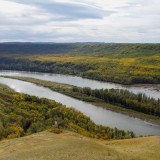
One of two proposed loacations for Site C Dam (Damien Gillis photo)

Site C Dam: A Bad Deal for British Columbians

Share

EDITOR’S NOTE: This letter was originally published in the Prince George Citizen, in response to a previous article on Site C Dam.

I live in the Peace Valley, upstream of the proposed Site C dam.  That has led to a lifetime interest in electricity policy.  I read with interest the recent article entitled, “Site C update: more power, more cost.” (July 27) which states, “BC ratepayers will be forking over the estimated $7.9 billion to build the Site C hydro-electric dam on the Peace River…”

Hydro customers do guarantee the corporation’s debt although very few of us give that much thought.  There’s been no need so long as the debt remained stable, was prudently managed, and publicly available.  But things have changed.  After many years of remaining stable, the debt load in the past three years has steadily climbed and those figures do not include the longterm contractual obligations for supply from BC independent power producers, which the province requires Hydro to use.  The public is refused access to those contracts.  How willing should ratepayers be to guarantee an additional $7.9 billion without having the right to scrutinize what they are already on the hook for?

The article says we need Site C because provincial demand is expected to rise 40% in 20 years.  In the past, Hydro ratepayers could – and did – use BC Utilities Commission (BCUC) hearings to hold Hydro and its government handlers to account for their claims.  But last year, the Energy Act removed Site C and ten other projects from BCUC oversight.  Now ratepayers are told they’ll pay the costs but are denied a forum to check the need for and suitability of those costs.

Last year’s Energy Act requires BC to be ‘self-sufficient’ in electricity.  All generation must occur within the province.  Hydro must be able to meet the province’s future need under “the most adverse sequence of stream flows within historical record.”  So self-sufficiency is to protect our electricity supply in times of drought.  Why, then, would we build another dam and reservoir that would be subject to the same drought we’re trying to protect ourselves from?  Surely it would make more sense to diversify our source of supply so that when droughts do occur, we have other sources (natural gas, geothermal, wind, solar) available.   

According to the article, Site C is “extremely cost-effective” at $87-95 per megawatt.  The comparable cited is $125/Megawatt for the green energy call – a most expensive source.  I’m told that firm power with delivery in 2012 was recently quoted at $27-35 on the Pacific Northwest wholesale market.  Longterm predictions are chancy but the projected $81-85 for 2030 doesn’t make Site C look shiny either.  It appears that Site C can only be called “extremely cost-effective” if cheaper sources are somehow eliminated.  The self-sufficiency requirement has created artificially expensive electricity in BC.

Ratepayers have every right to call “Foul!” when they are taken for granted in the manner we are seeing.  Every avenue they might use to protect their interests is blocked.  They are expected to swallow the rate increases and guarantee the risk, all while having no control over the policy.  That’s wrong.

Gwen Johansson has served on numerous energy-related endeavours.  She co-chaired  the Northeast Energy & Mines Advisory Committee; served on  BC Hydro’s Integrated Electricity Planning Committee; is a former BC Hydro Director and a former member of  the BC Energy Council.  She lives in the Peace Valley near Hudson’s Hope. 


Share

Mike Smyth: Some First Nations Worried Clark Pulling Plug on IPP Deals Without Consultation

Share

Read this Province editorial from Michael Smyth on the growing sense that Premier Christy Clark is about to dump the Campbell private power program.

“B.C’s private-power gold rush was always Gordon Campbell’s baby. But
the new Clark regime seems intent to slam the brakes on private power,
rather than slam consumers with big electricity rate hikes in the run-up
to an election. But now, B.C.’s First Nations are raisng the stakes behind the scenes. I
obtained a letter from the province’s largest aboriginal groups – the
B.C. Assembly of First Nations, the First Nations Summit and the Union
of B.C. Indian Chiefs – pleading with the government to talk to them
before cancelling dozens of projects.”

Share

Yinka Dene First Nations Reject Enbridge’s Financial Incentive Offer

Share

Read this story in the Vancouver Sun on the rejection by the five First Nations that make up the Yinka Dene Alliance of financial incentives offered by Enbridge in an effort to secure  support for its proposed Northern Gateway Pipeline.

“In its response to Enbridge, the Yinka Dene Alliance called the
Calgary-based company’s offer a ‘desperate and disrespectful attempt to
buy our support for this pipeline.’ Enbridge’s one-page offer to
the Nadleh Whut’en First Nation, one of the members of the alliance,
said ownership would provide an estimated $7-million profit over the
30-year pipeline life. The offer was described as time sensitive. ‘Consequently, we strongly recommend that you meet with our aboriginal
relations team at your earliest opportunity to receive the agreement,’
Enbridge said in the letter obtained by The Vancouver Sun.” (Sept 9, 2011)

http://www.vancouversun.com/business/First+nations+group+rejects+pipeline+ownership+offer/5374046/story.html#ixzz1XVjGhQxN

Share

Clark Government, Oil Lobby Agree Better Regs Needed for Fracking

Share

Read this report form The Globe and Mail on the Clark Government’s recent announcement that it will be taking steps to better regulate the controversial hydraulic fracturing industry regarding key issues such as water and chemical use. The Canadian Association of Petroleum Producers also released its own report backing more stringent regulations.

“British Columbia will force oil companies to reveal the chemicals
used in hydraulic fracturing, a move supported by the leading industry
association as it looks to head off public opposition to shale gas
production across the country. B.C. Premier Christy Clark
announced on Thursday that the government will establish a public
registry which will detail where companies are engaged in hydraulic
fracturing, and the chemicals they are using in the fluids that are shot
into the rock to unlock natural gas.” (Sept. 9, 2011)

http://www.theglobeandmail.com/report-on-business/industry-news/energy-and-resources/oil-industry-backs-more-rules-for-fracking/article2158931/

Share

Mark Hume on Cohen, DFO’s conflicting mandate to protect wild salmon while promoting aquaculture

Share

Read Mark Hume’s take in the Globe and Mail on yesterday’s pivotal session at the Cohen Commission into disappearing Fraser sockeye.

“Brock Martland, associate commission counsel, set the stage for a
free-wheeling debate when he opened with ‘a big question,’ asking the
panel if they thought DFO could successfully both regulate and promote
the aquaculture industry, while protecting wild salmon stocks. ‘I
don’t believe that’s possible … those two [mandates] are in conflict,’
shot back Ms. Stewart, who believes the industry damages wild salmon by
spreading sea lice and disease. She said the regulation of fish
farms should be handed off to some other federal agency, such as
Agriculture Canada or Industry Canada, while DFO should be charged with
managing and protecting wild salmon.” (Sept 7, 2011)

http://www.theglobeandmail.com/news/national/british-columbia/cohen-inquiry-debates-dfos-ability-to-regulate-and-promote-salmon/article2157383/?from=sec431

Share